Welded Insulated Cylinders
The pickup-truck-sized thermos that turned micro-bulk into an industry
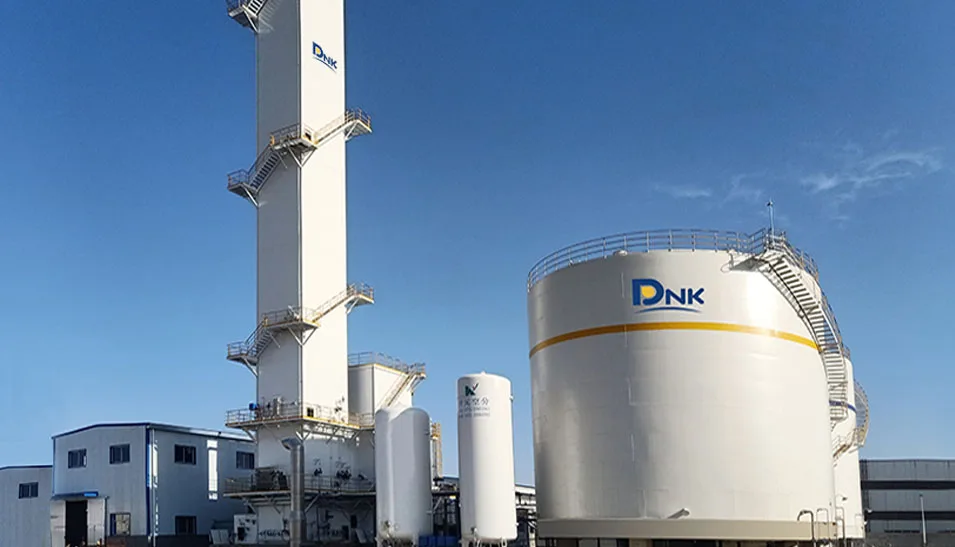
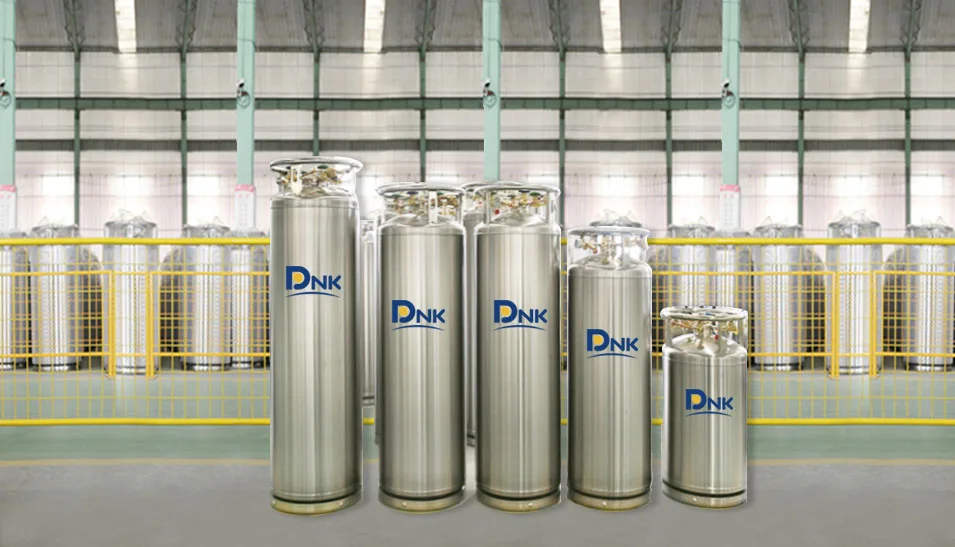
Learn more →A thermos the size of a house, holding liquid air at -196 °C and losing a fraction of a percent a day. The CFL series spans 5 to over 100 m³, built and pressure-tested under A1/A2 licenses for oxygen, nitrogen, argon, CO₂, LNG and ethylene duty.
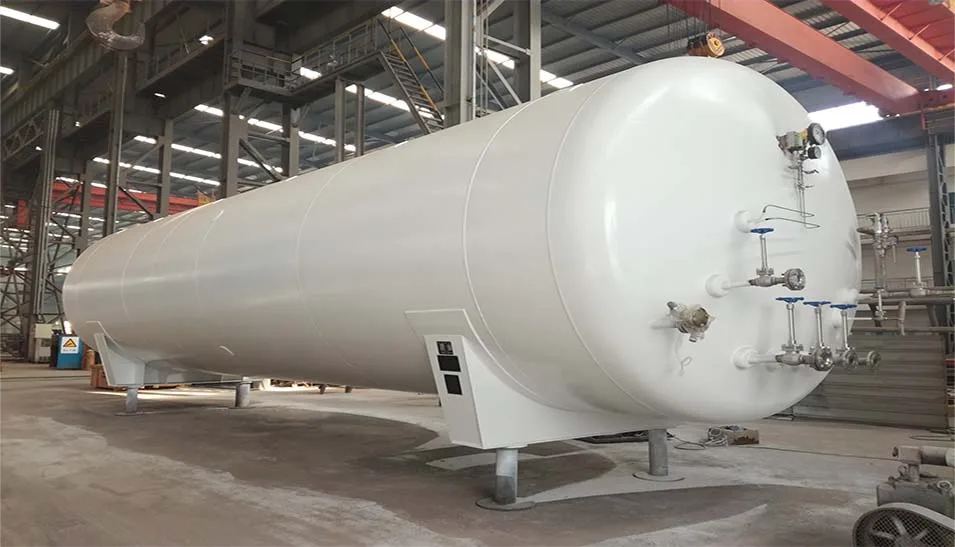
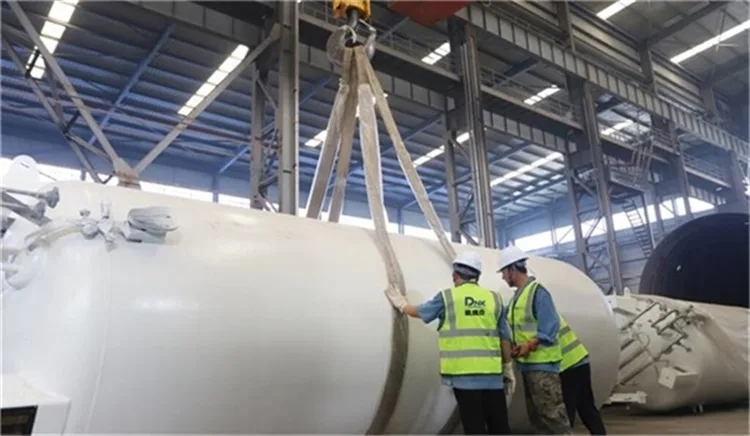
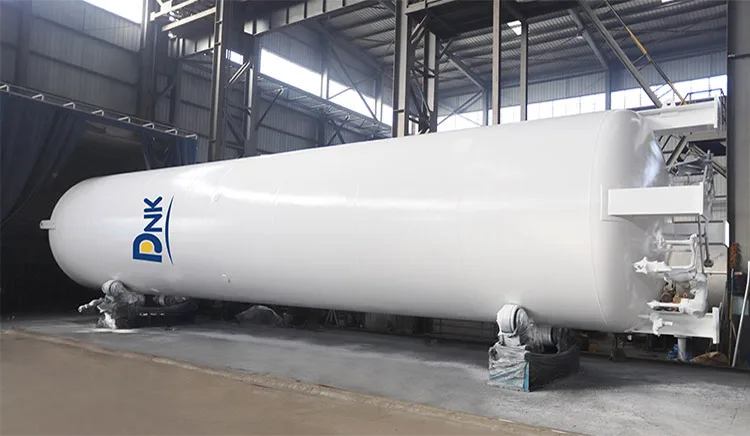
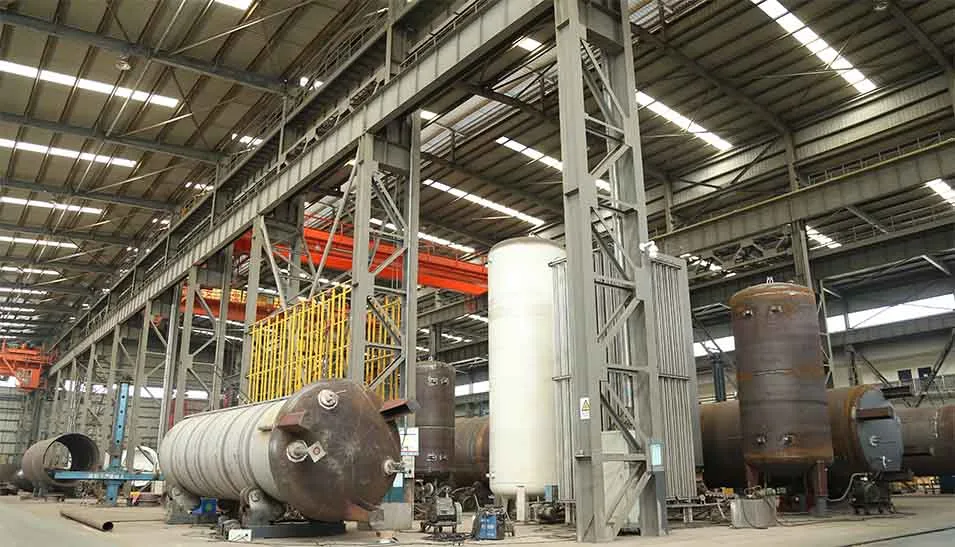
Two vessels, one inside the other. The inner tank holds the liquid; the outer shell carries the vacuum. Between them sits perlite - expanded volcanic glass - and the annulus is pumped down to high vacuum. Heat can't ride convection through a vacuum, radiation gets intercepted by the multilayer shim, and what's left conducting through support struts and nozzles is what your daily evaporation number is made of: 0.4% a day on a 5 m³ unit, down to 0.23% on a 100 m³ giant. Top that up against your draw-off schedule and a tank can sit unattended for weeks.
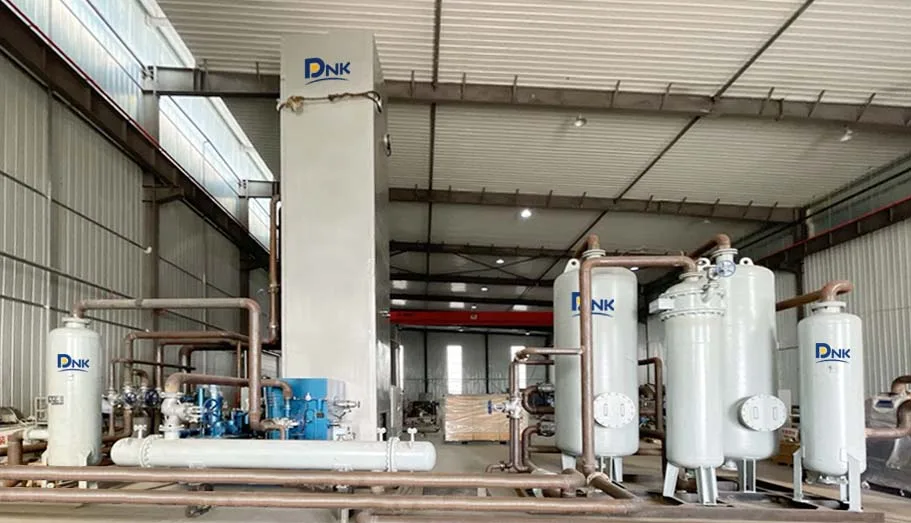
A CFL tank is not a vessel with gauges bolted on; it's a mini plant:
| Parameter | Range / Detail |
|---|---|
| Series | CFL horizontal and vertical, 5 – 100+ m³ |
| Media | LOX, LIN, LAR, LCO₂, LNG, liquid ethylene |
| Design pressure | 0.2 – 2.8 MPa per service |
| Construction | Inner vessel S30408 stainless; outer shell Q345R carbon steel |
| Insulation | Vacuum-powder or high-vacuum multilayer; annulus evacuated and monitored |
| Static evaporation loss | 0.23% – 0.4% per day depending on size and service |
| Systems | Fill, drain, pressurize, safety relief, level & pressure measurement, vacuum maintenance, spray |
| Codes | A1/A2 pressure vessel design & manufacture licenses |
| Accessories | Gauges, safety valves, rupture discs, cryogenic valves from qualified makers |
| Warranty | 12 months from commissioning |
Inner vessel in S30408 austenitic stainless (16MnR for CO₂ duty), outer in Q345R structural steel. Welds get radiographic review under our A1 pressure-vessel manufacturing license; A2 covers the design. Every tank leaves with a full documentation package for your jurisdiction's registration - we've handed sets over on sites in 20+ countries.
Industrial gas supply. Behind every small ASU or VPSA plant we ship, usually several of them, buffering production from truck schedules. LNG filling stations, gasification and storage-distribution stations, peaker stations. The same vacuum-jacketed anatomy serves methane duty with the spray system fitted. Hospital oxygen banks, food and beverage CO₂ fields, laser-cutting shops that want a liquid buffer instead of a cylinder cage.
These tanks sit on concrete pads with insulation underneath - ground heat is a real leak path. Orientation is vertical by default; relief discharge routing, oxygen exclusion zones and vaporizer sizing all come in our foundation and P&ID package rather than being improvised by your fitter. First fill is a warm-down conversation we're happy to supervise remotely.
At 0.23–0.4%/day evaporation, a full tank holds usable liquid for weeks to months - a 50 m³ LIN tank loses roughly a tenth of its content monthly while idle. That number is also why sizing matters: an oversized tank wastes cold on standby, an undersized one fights your truck schedule.
Hardware-wise yes; safety-wise oxygen service is strict: degreasing, oxygen-clean procedure, dedicated valves and relief devices. We build oxygen-spec tanks accordingly and will not let a hydrocarbon-service tank switch to LOX without a documented conversion. Ask at order, not after.
Higher working pressures for direct-fill or pipeline-adjacent duties. The pressure class changes shell thickness, relief architecture and cost, so pick it against your real max demand pressure. The series covers 0.2 through 2.8 MPa to keep that choice from becoming a special order.
Vaporizer, valves, gauges and relief sets ship loose-fitted on the nozzle group with full piping diagrams, or fully manifolded on larger units. Either way the P&ID in your package matches what arrives, down to tag numbers.
The vacuum port exists for exactly this: when insulation aging lifts your evaporation rate, a re-evacuation resets it. Spares, seals and the procedure go to our after-sales desk for the life of the tank - the lifetime-parts commitment isn't marketing copy.
Cryogenic tanks look interchangeable until the first month of liquid losses tells you otherwise. Four numbers on the datasheet deserve interrogation before price is ever discussed:
A storage tank in a working gas site is a system, and the CFL line ships with all nine subsystems piped, tested and documented:
Tank volume is sized against three habits: your peak transfer rate (a tanker or a filling station sets the tempo), your resupply interval (a plant that gets one liquid delivery a week lives in a bigger tank than a daily-resupply site), and standby duty (hospitals and gas companies pay for reserve volume they only touch on emergency weeks).
Commissioning a cryogenic tank is one word: cool-down. Ambient steel cracking open to -196 °C liquid is a fatigue story; our procedure cools in staged lifts with the fill-control loop doing the work. First cool-down of a warm tank takes hours to days depending on volume, and never let a contractor "save time" by pouring liquid onto warm walls.
Shipped as standard horizontal road-transportable units up to our transport-limited sizes, vertical footprint-minimized units for tight sites, and everything in between; rail and barge arrangements quoted for the 50 m³-plus class. Your tank arrives with pressure-vessel certification, the vacuum bake record, and the nine systems wet-tested before the desiccant bags go in.
A CFL quotation is built from seven inputs, and any buyer who supplies all seven gets an accurate price in one round instead of five:
Tanks ship internationally as standard road freight within our transport-limited sizes; the 50 m³-plus class goes by barge or rail rig with route surveys we specify. Every tank that leaves Kaifeng carries its pressure-vessel dossier, vacuum bake-out record and the wet-tested valve stack - which is precisely the paperwork your insurer, your safety officer and your next inspection will ask to see.
The pickup-truck-sized thermos that turned micro-bulk into an industry
Learn more →Tell us your flow, purity and pressure - an engineer replies within 24 hours.
Flow, purity, pressure and application - four numbers are enough to start.