Gaseous ASU
The two processes that decide whether a gaseous ASU is cheap to build or cheap to run
Learn more →When the gas has to be compressed, and the gas is oxygen or nitrogen at process pressure, the machine is a reciprocating compressor - pistons, valves and crank throw doing what centrifugals won't. Built for petroleum, chemical, natural gas and air separation duties.
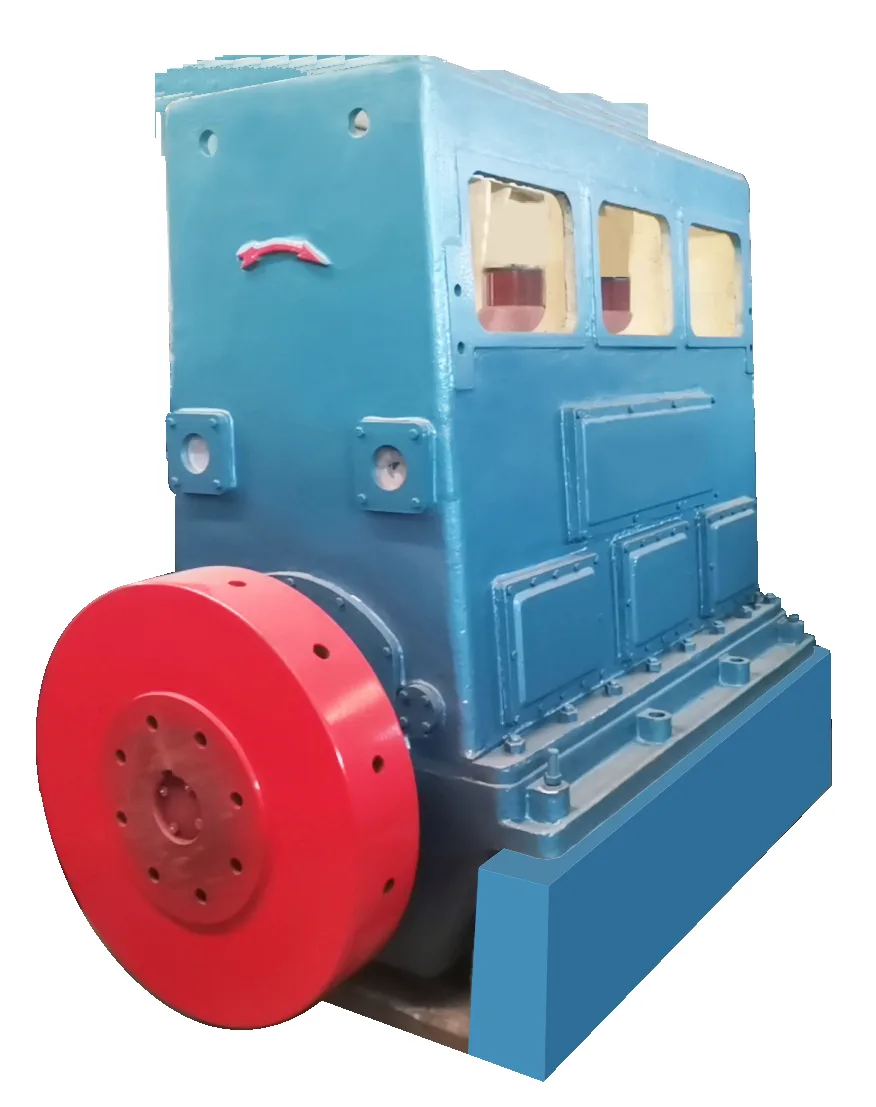
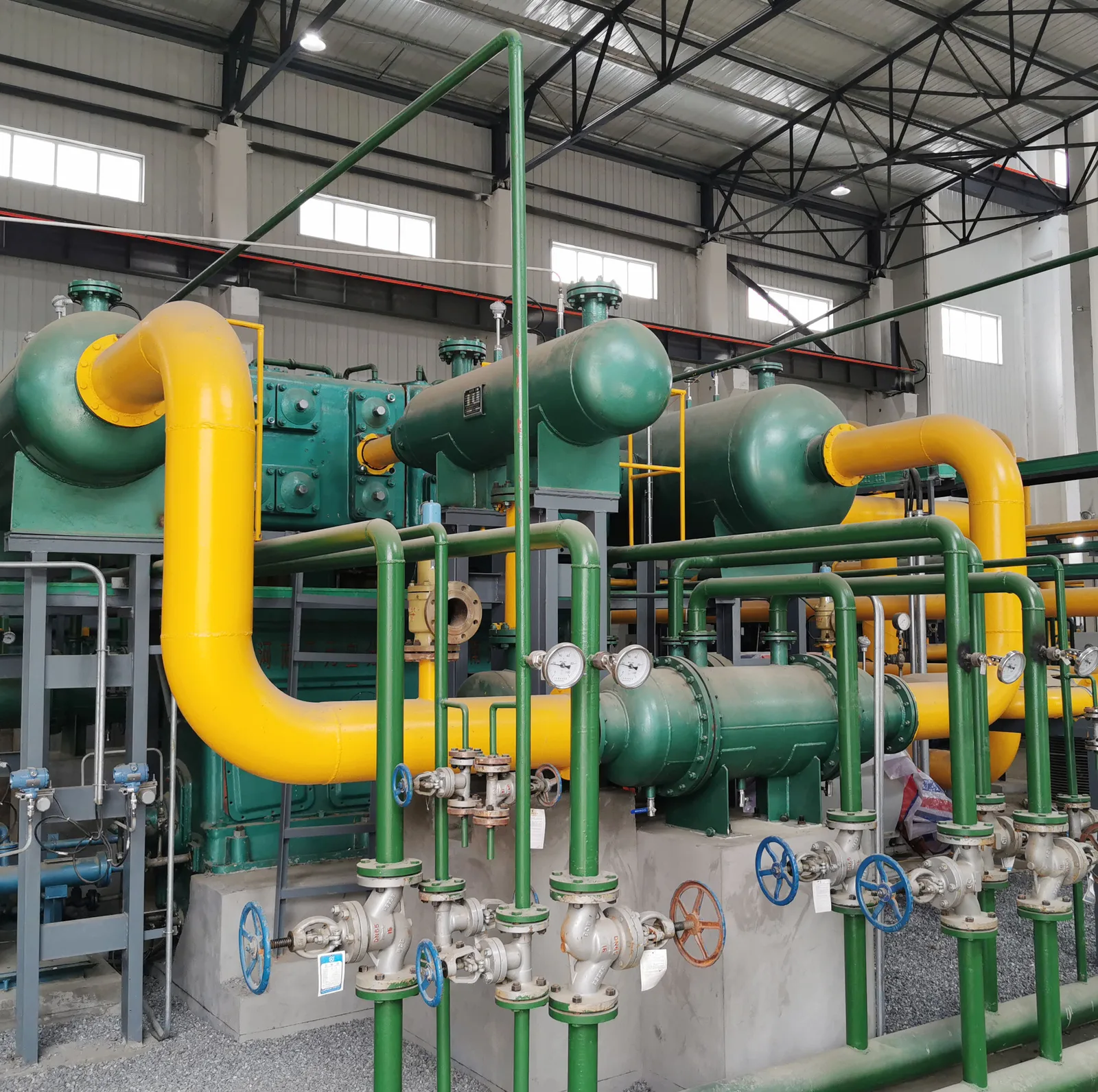
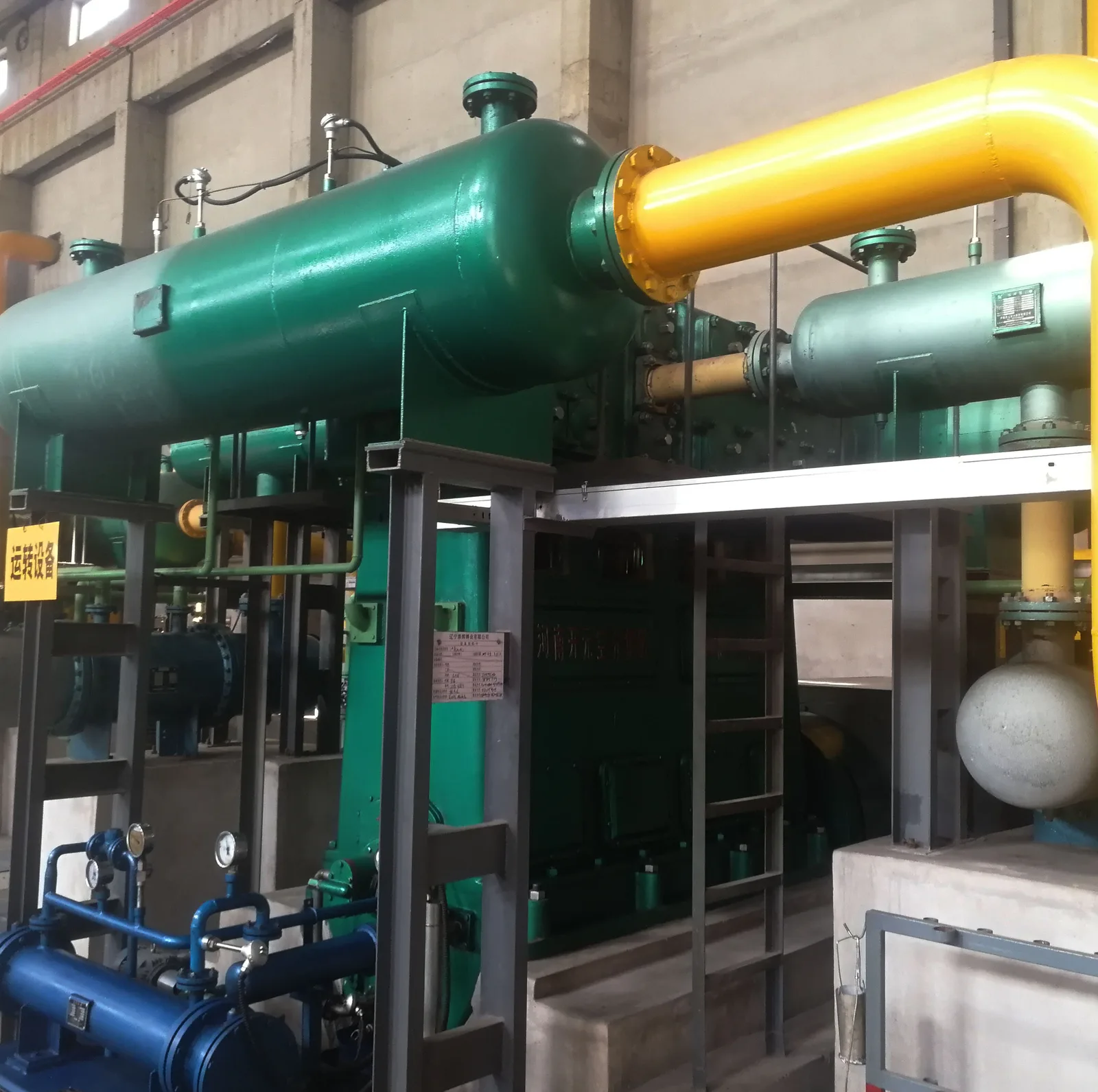
A crankshaft turns a connecting rod; the rod drives a piston down the cylinder. On the downstroke, cylinder volume grows, the intake valve opens and gas fills the space. On the upstroke, volume collapses, the discharge valve opens and the gas leaves at pressure. Two or more stages take that from inlet vacuum all the way to pipeline pressures, with intercoolers between stages pulling the heat of compression back out.
That's why reciprocating machines rule the medium- and high-pressure niche: positive displacement holds flow honest as pressure rises, where centrifugals would surge or stall. The cost of that honesty is vibration and pulsation - both engineered into our design with counterbalance, pulsation bottles and foundation guidance rather than hoped away in the field.
| Parameter | Range / Detail |
|---|---|
| Series | 1J2L, 2J2L and related reciprocating types |
| Media | Oxygen, nitrogen and process gas service |
| Suction pressure | 0.005 – 0.012 MPa (vacuum-grade inlets available) |
| Discharge pressure | 0.25 – 1.0 MPa |
| Lubrication | Oil-free and lubricated variants per gas purity requirement |
| Drive | Motor-driven, direct or belt, per site convention |
| Valve design | Ring/plate type, proven in air-gas service |
| Cooling | Cylinder jacket or intercooling per stage design |
| Applications | Petroleum, chemicals, natural gas, air separation ancillary duty |
| Warranty | 12 months from commissioning |
Oxygen compression is a materials discipline: oxygen-enriched gas plus oil mist plus heat is a fire triangle the industry has all the obituaries for. Our O₂-rated machines run oil-free or oil-separated cylinder designs with oxygen-service valve materials, strict inlet cleanliness, and discharge temperature interlocks that shut the machine down before a hot spot becomes a headline. Nitrogen service is mechanically friendlier - the same block with trim changes.
Gas recovery systems - the nitrogen and hydrogen recovery skids we build run reciprocating boosters to return purified gas to the furnace header at line pressure. Air separation battery limits taking cryogenic product to customer pressure. Pipeline injection and gas lift in petroleum service; hydrogen recycle in chemical plants; CNG and associated gas at wellheads. If the duty says "take this gas from X to Y pressure in small or medium flow," it's a recip machine, and often ours.
Cylinder blocks and frames are machined in our Kaifeng workshops under the same pressure-vessel licenses that cover our cold boxes; valving, rings and seals are common-standard parts stocked for field service - a compressor that can be repaired in-country with parts from the builder is worth more than a marginally prettier machine whose spares cost six weeks of freight.
Below roughly 1 MPa boost in moderate flow, oil-free screws win on footprint and low pulsation. Beyond that pressure band, or when turndown and efficiency carry the decision, reciprocating takes the economics. Send the inlet/outlet spec; the honest answer varies by site and we price both types when the range is genuinely ambiguous.
Valve and ring inspection intervals run by the thousands of operating hours with condition checks before change-out; lubrication is per-manual on oiled frames, none on oil-free cylinders. Our maintenance agreements list these as line items against your machine serial, which is how the schedule stops being folklore.
Mechanically close, but trim, materials, cleanliness and safety interlocks differ by service - order the machine for its gas. Many owners keep an oxygen-rated unit and a nitrogen unit as spares of each other only for emergency duty, clearly tagged, never for silent swap-out.
Every gas plant eventually needs a machine that takes gas from a low-pressure source and delivers it at line pressure in a defined, reliable, controllable way. Centrifugals do it at megawatt scale; screw machines do it on clean vapor at moderate ratios; the reciprocating piston does it in the range where most real plants actually live - modest flows, meaningful pressure rise, hostile or valuable gas, and a budget that values maintainability over elegance.
The honest strengths of the 1J2L/2J2L family, in the order plant managers cite them:
Compressing air is easy. Compressing oxygen and nitrogen service gas is a different engineering conversation, and it happens before you sign anything:
A correct compressor quote takes six inputs: gas and composition, suction pressure and temperature, discharge pressure, flow at standard conditions, duty pattern (continuous or on-demand), and site ambient plus grid. From those, cylinder count, stage arrangement, bore and stroke choice all fall out of sizing math we will show you - not a catalog pick.
In air-separation packages this family appears as the workhorse behind product headers, vacuum recovery systems and gas-injection boosting. As a standalone, it is the heart of the exhaust-gas recovery units we ship to furnace lines - which is the neighboring product page and usually the first call these machines come from.
Maintenance rhythm that keeps these machines at twenty years: valve plate inspection on the service calendar, rings at the wear limits in the manual (measured, not guessed), gland packing replaced during planned windows, and the vibration and temperature logs your operators keep - the same logs that predict every failure we have ever been called to clean up after.
Compressors are selected, not picked. Six inputs give a firm quotation - gas and composition, suction pressure and temperature, discharge pressure, normal and peak flow, duty pattern, site ambient and grid - and the sizing sheet that comes back shows its work: cylinder count, stage pressures, bore and stroke, valve loading, motor rating. A seller who cannot show you that arithmetic is selling a box.
Before shipment, every unit runs a mechanical completion test on our pad: vibration, bearing and valve temperatures at rated pressure, capacity verification against the datasheet. The test record ships with the machine - it is the baseline your maintenance department compares against at every service ever after.
Spares for a compressor, said plainly: valve plates and seats, piston rings, packings, gaskets, suction/discharge valve springs. That kit is small, cheap and the difference between a two-hour planned service and a two-week unscheduled hunt. We ship a first-run kit with every machine and publish the wear limits in the manual so replacement is measured against the datasheet instead of against the calendar.
For oxygen duty the cleanliness package is specified in writing, for vacuum duty the leakage class is verified at test, and for any duty the pulsation-control and foundation drawings arrive before the concrete does. Boring, documented, and exactly what a compressor that runs twenty years looks like on paper before it looks like that on the floor.
The two processes that decide whether a gaseous ASU is cheap to build or cheap to run
Learn more →Tell us your flow, purity and pressure - an engineer replies within 24 hours.
Flow, purity, pressure and application - four numbers are enough to start.