VPSA Oxygen Plant
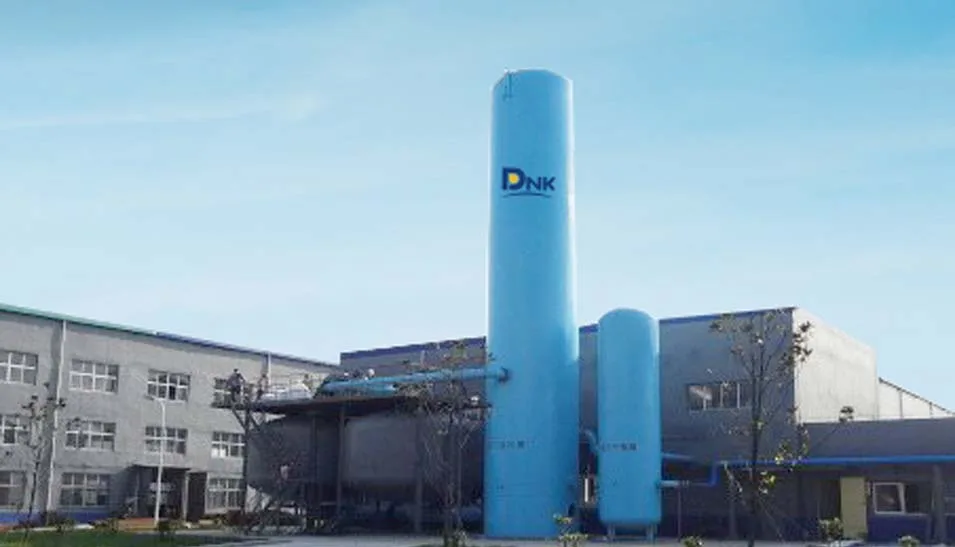
When your oxygen demand passes the point where PSA skids stop making sense, vacuum does the regenerating
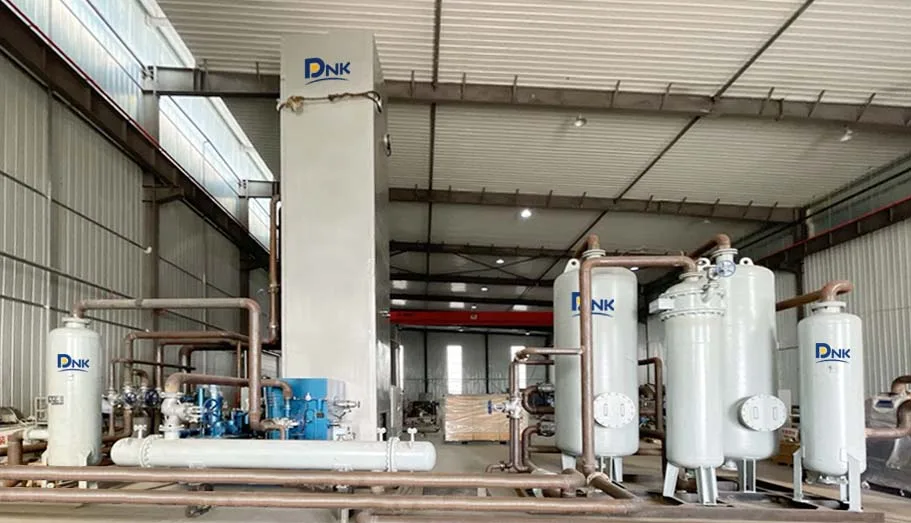
Learn more →Stop renting your oxygen by the cylinder. The KYPO series makes 10 to 150 Nm³/h of 93±3% oxygen on site, from ordinary air - wired, tested and boxed by a factory that has run air separation for over twenty years.
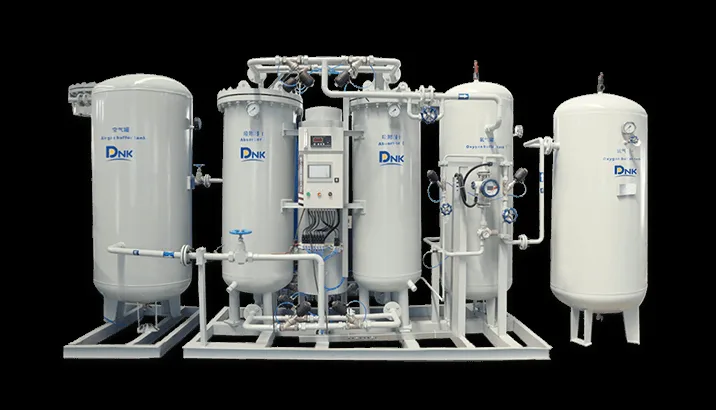
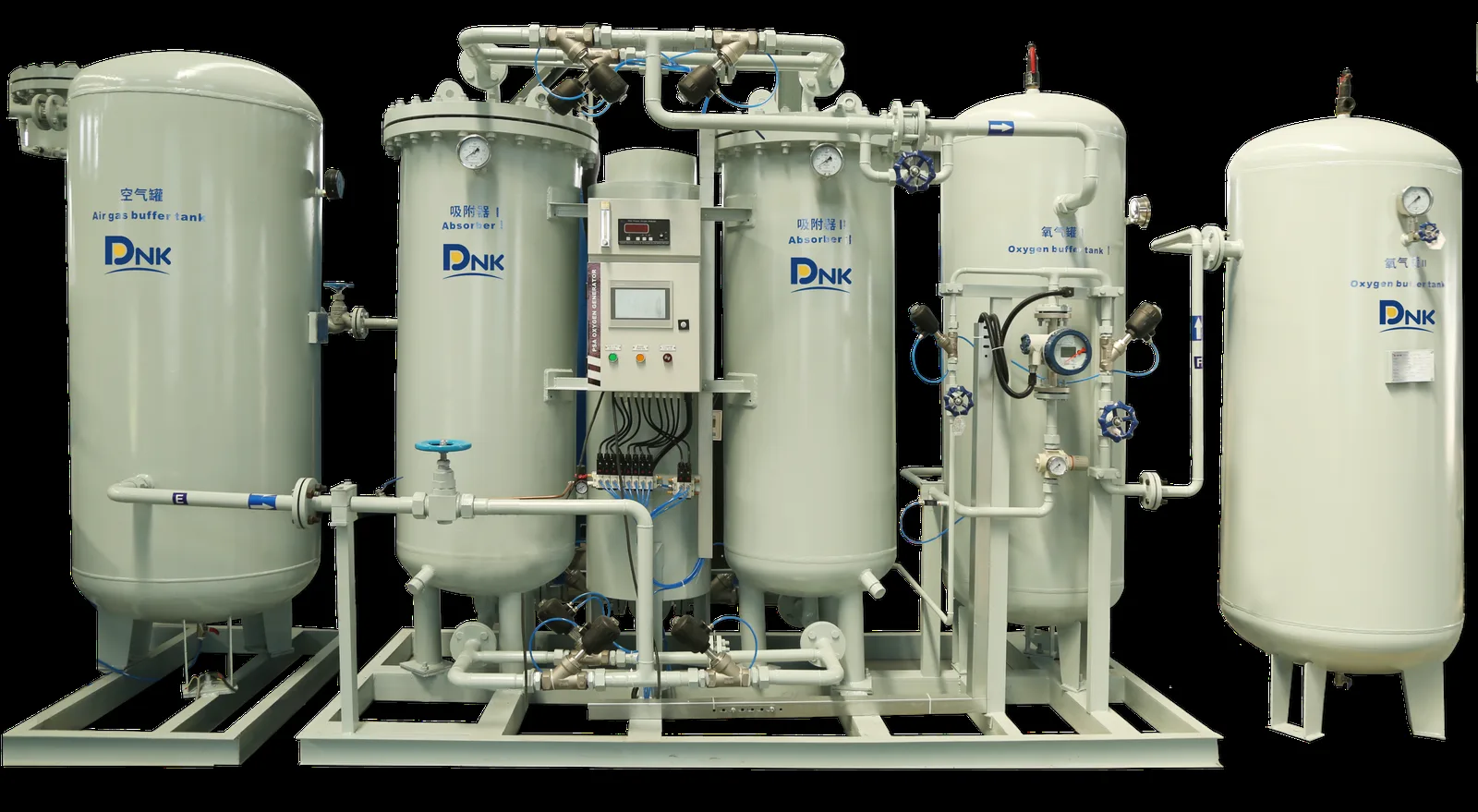
Nitrogen generator sieves grab oxygen. Lithium-based oxygen sieves do the opposite - they preferentially adsorb nitrogen, letting oxygen run ahead of them and out of the tower in an enriched stream. Same pressure-swing choreography, opposite target molecule. Compressed air in at roughly 0.5 MPa, 93±3% oxygen out the top, continuously, while the second tower depressurizes and vents the nitrogen it was holding.
That purity band - 93%, plus or minus three - is the PSA sweet spot. It's more oxygen than air ever gave you (21%) and it's cheap to hold there. When a process genuinely needs 99.5% or higher, that's a different machine's job; we build those too, and we'll tell you which one fits.
| Parameter | Range / Detail |
|---|---|
| Model series | KYPO-10 to KYPO-150 |
| Oxygen capacity | 10 – 150 Nm³/h |
| Purity | 93 ± 3% (oxygen-enriched, not medical USP grade) |
| Discharge pressure | 0.3 – 0.55 MPa |
| Adsorbent | Lithium-exchanged zeolite molecular sieve |
| Oxygen concentration output | Continuous, analyzer-monitored |
| Control | PLC, auto start/stop, purity interlock |
| Power supply | 380 V / 50 Hz or to your grid spec |
| Cycle life | Valve packs rated for continuous industrial duty |
| Warranty | 12 months from commissioning |
Oxygen-enriched combustion. Blast furnaces and electric arcs, glass furnace oxy-fuel firing, copper and lead flash smelting - oxygen lances eat less fuel and cut NOx when the oxidizer is 93% oxygen instead of air.
Sewage treatment. Fine-bubble diffusers running oxygen rather than air roughly triple the mass transfer driving force. Retrofits usually find the blower was the bottleneck, and a small KYPO skid sits right next to the aeration tank.
Pulp bleaching, aquaculture, medical supply. Pulp mills inject oxygen in the bleaching stage. Shrimp ponds and fish farms pipe it to paddle-wheel diffusers during peak load. Hospitals and oxygen stations feed manifolds and cylinders from KYPO plants feeding storage systems.
Run the arithmetic we run for every buyer. A liquid or cylinder supply price divided against on-site generation cost at your actual duty gives the payback. Most continuous operations land inside the first year of machine cost. Beyond the money there's a safety ledger: no vaporizer icing, no cryogenic tanker maneuvering your yard, no cylinder-change accidents, no running dry at 2 a.m. during a festival weekend when nobody delivers.
Our factory holds A1 and A2 pressure vessel licenses and ISO9001 with UL on the electrical side. The towers on your skid are code vessels, X-ray reviewed welds and pressure-tested before dispatch - not rolled sheet steel with a paint job. It's an unglamorous place to spend money, and exactly the place a serious manufacturer shouldn't cut.
Send us flow, purity, pressure, altitude and application. The factory engineer comes back within 24 hours with a sized model, compressor pairing, energy estimate and layout drawing. MOQ one unit - small plants are how most PSA buyers start.
It can push past 94% momentarily, but nitrogen's molecular size is close enough to oxygen's that purity beyond the low-90s costs disproportionate energy and tower size. That's physics, not marketing. For 99.5%+ you want cryogenic separation (our small-scale ASU) or a chemical process, and we'll quote those honestly instead of oversizing a PSA.
The dial is product flow: slow the draw and purity rises within its band; push flow to capacity and it drifts low. We set the design point at your required purity with margin for sieve aging, so year-eight output still meets spec rather than starting at the edge of tolerance.
If the oxygen goes to people or to a regulated process - yes, you need one, and honestly you need a calibrated second opinion on the analyzer itself. Paramagnetic cells are the common industrial pick. Quote requests that name an analyzer brand get quoted with it wired in; otherwise we supply a sized connection and alarm interlock.
Yes - product gas can feed your header directly, a booster into cylinders, or a liquefier into storage, or all three staged. The KYPO skid's job is clean oxygen at 0.3–0.55 MPa; everything downstream is standard gas plant work we do every day.
Expect a compressor-level noise, roughly 75–85 dB(A) at one meter without enclosure, dominated by the compressor and vent silencers, which ship standard. A simple acoustic shelter takes it below office-adjacent limits if you're installing near occupied buildings.
Nine out of ten KYPO orders fall into one of six application families, and the purity you specify has less to do with the machine than with the process downstream:
There are a thousand sellers of PSA oxygen boxes on the internet. What you are actually buying is sieve loading discipline, valve quality and after-sales math:
To quote accurately we need six numbers, and you probably have five of them on hand: consumption in Nm³/h at peak and at average; required oxygen concentration at the point of use; line pressure; altitude above sea level; ambient temperature extremes; and hours per year. If you already burn liquid oxygen, send twelve months of delivery invoices - the average and peak flow fall out of that document cleanly.
The running cost of a PSA oxygen plant is electricity, nothing else that matters. Send your flow and your tariff and we will run the actual arithmetic; in oxy-fuel and aquaculture duty the comparison against delivered liquid oxygen usually favors the plant inside the first production year. No obligation and no form-fill theatre.
One last commitment that costs nothing: if a PSA machine is the wrong technology for your duty - too much flow, purity spec too high, ambient too hostile - we will tell you so and quote a VPSA or a small cryogenic unit instead. We sell plants; the letter on the skid is the least important part of the sale.
When your oxygen demand passes the point where PSA skids stop making sense, vacuum does the regenerating
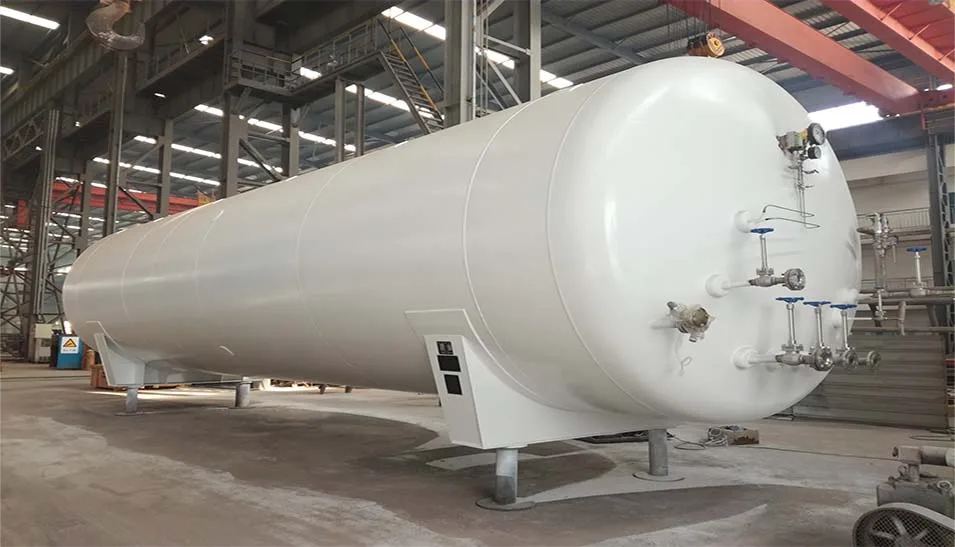
Learn more →A thermos the size of a house, holding liquid air at -196 °C and losing a fraction of a percent a day
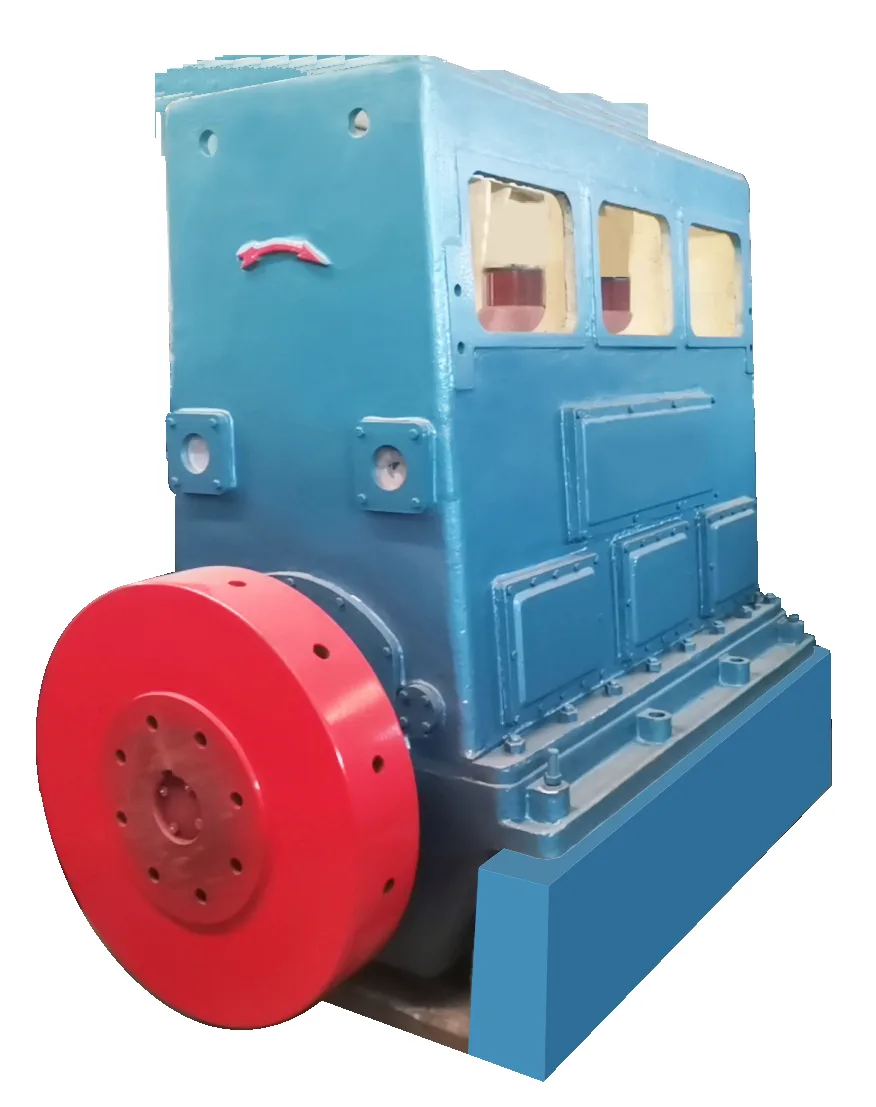
Learn more →When the gas has to be compressed, and the gas is oxygen or nitrogen at process pressure, the machine is a reciprocating compressor
Learn more →Tell us your flow, purity and pressure - an engineer replies within 24 hours.
Flow, purity, pressure and application - four numbers are enough to start.