Gaseous Air Separation Unit with Ultra-Low Pressure Process
The two processes that decide whether a gaseous ASU is cheap to build or cheap to run - we do both. Ultra-low-pressure trains sipping air at 0.43 MPa, and internal-compression trains delivering up to 8.5 MPa straight off the cold box.
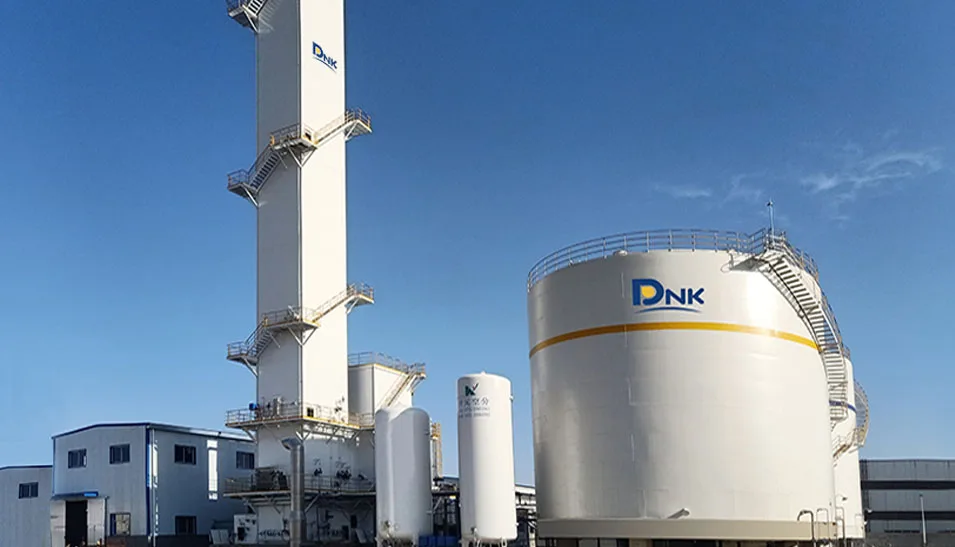
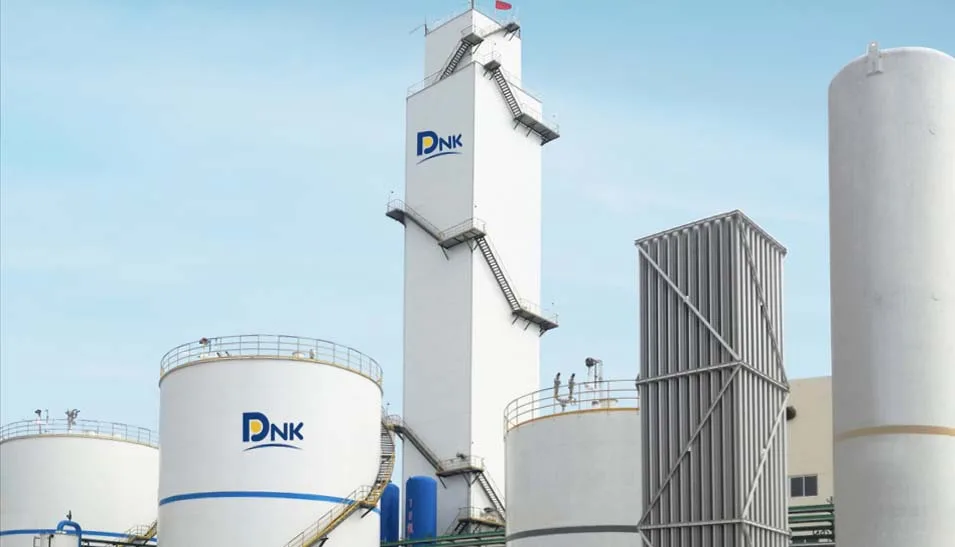
Product gallery
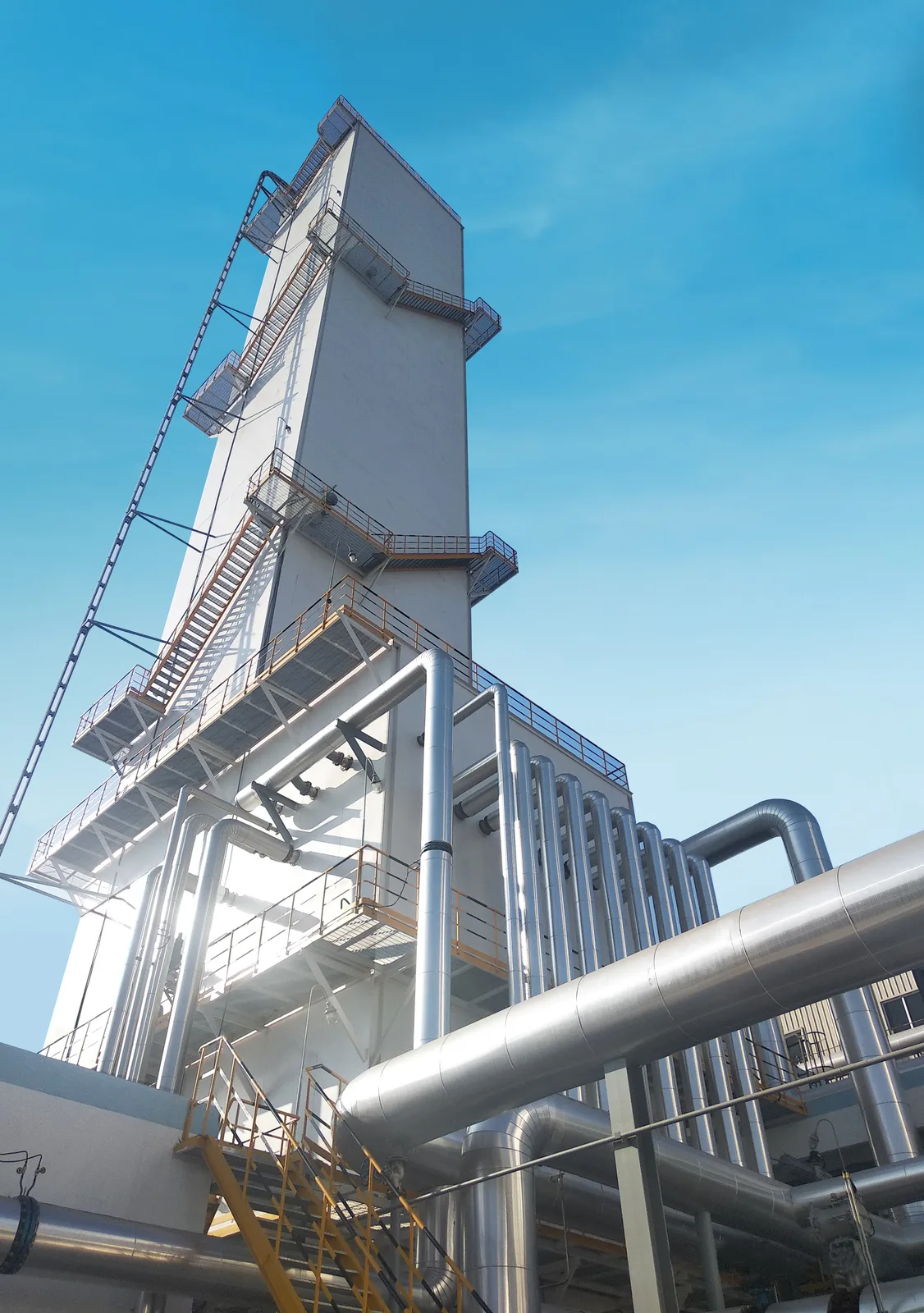
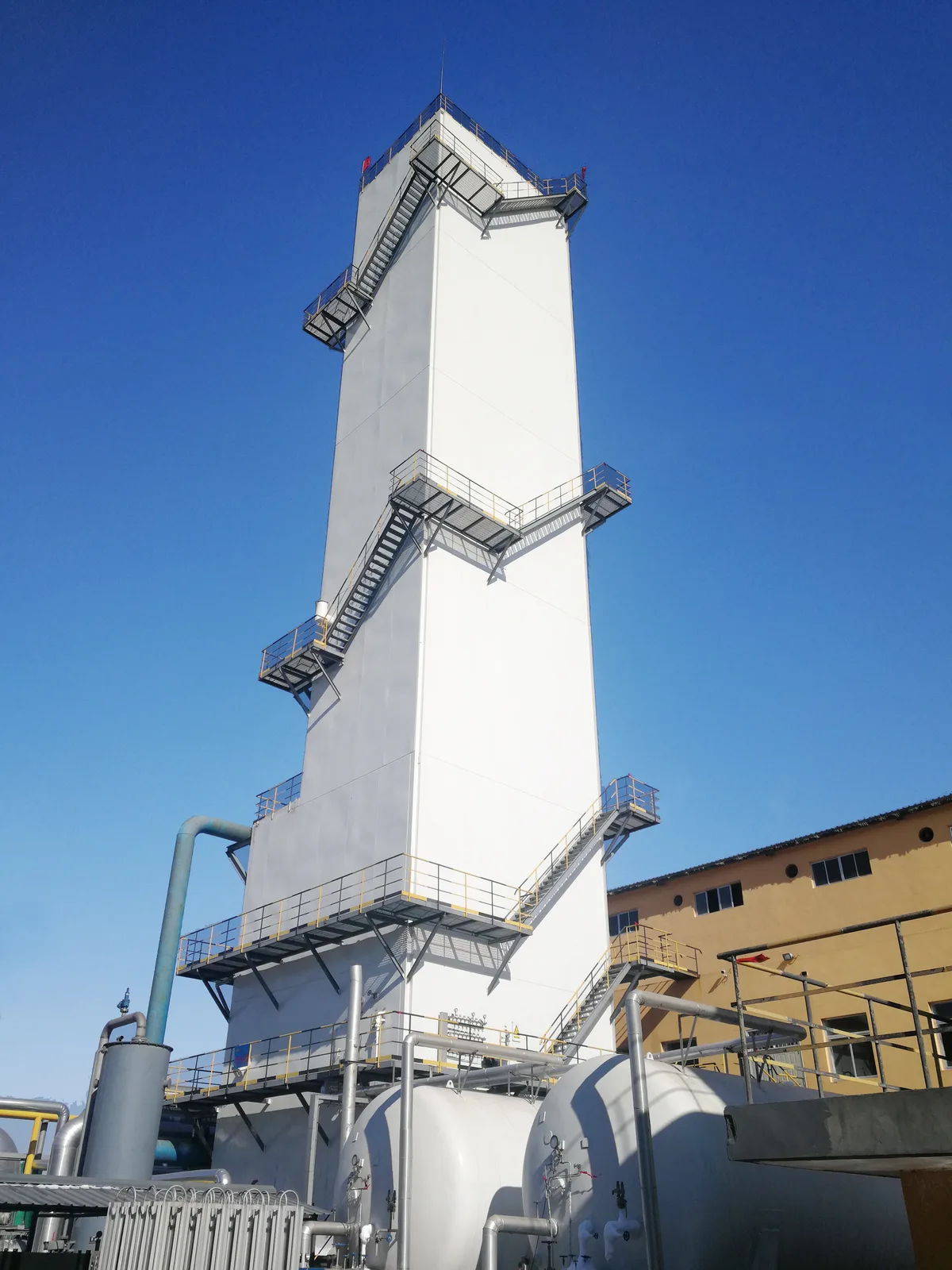
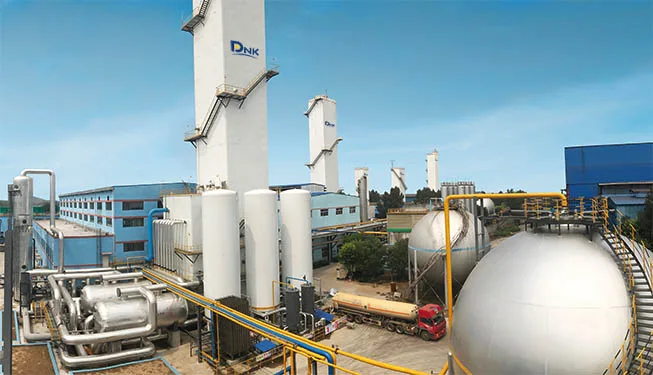
Two Ways to Make Gas - and What Each One Costs You
A gaseous ASU has to answer one question before anything else: where does the pressure come from? Push your product gas through a mechanical compressor after the cold box and you buy cheap refrigeration but pay forever in high-pressure compression. Build the pressure inside the cold box - pump liquid oxygen, let it vaporize, let the nitrogen cycle boost itself - and the compressor runs lazy all its life. That second path is internal compression, and its endgame is our ultra-low-pressure process, where the feed air compressor tops out at 0.43 MPa.
Ultra-Low-Pressure Process
Most legacy gaseous plants gulped air at 0.5–0.6 MPa. We push the minimum practical back to 0.43 MPa by combining high-efficiency packed towers in both upper and lower columns with a multi-layer main condensing-evaporator of our own process design. Lower discharge pressure means a measurable cut in the single biggest power line on your utility bill - for a continuously running plant that's the whole business case. The process itself is patented technology with years of operating maturity behind it: simple flow scheme, stable operation, forgiving startup.
Internal-Compression Process
Single or double liquid pumps plus an air or nitrogen booster loop raise product pressure *inside* the cold box, so oxygen and nitrogen arrive at the battery limit at up to 8.5 MPa. No high-pressure oxygen compressor in your fenced area - a safety conversation buyers care about, and a maintenance one. Chemical plants feeding polymerization at 4–8 MPa, carbon steel lines pushing gas into pipelines: this is where it earns its keep.
Reference Duty Points
| Unit | Duty | O₂ yield | O₂ pressure | N₂ yield | N₂ pressure | Ar yield |
|---|---|---|---|---|---|---|
| KDON-6000/13000 | Chemical | 6,000 Nm³/h (200 TPD), 99.6% | 4.0 MPa | 13,000 Nm³/h (390 TPD), ≤10 ppm | 10 kPa | — |
| KDONAr-5000/550/150 | Steel | 3,750 Nm³/h (125 TPD) | 2.5 MPa | 550 Nm³/h (16.5 TPD) | 10 kPa / 1.5 MPa | 150 Nm³/h (6.5 TPD) |
| KDONAr-6000/6000/120 | Steel | 6,000 Nm³/h | Custom | 6,000 Nm³/h | Custom | 120 Nm³/h |
What Argon Changes
Once oxygen and nitrogen trains are running, the argon column is a modest increment: the crude argon side stream from the main tower gets rectified in a crude-and-pure argon pair, hydrogen-free deoxo, and you sell or use 3–5% of your air by volume as argon at 2 ppm oxygen, 3 ppm nitrogen purity. For merchant gas owners, the argon revenue line is often how the plant pays back early.
Engineering Discipline Behind the Numbers
Every unit is simulated in process software against your site data - altitude, ambient extremes, product turndown, future connection points - before steel is cut. Cold boxes arrive as large pre-piped blocks fabricated under our A1/A2 pressure-vessel licenses, tested at factory, then erected on prepared pads. Nearly 300 delivered projects carry that discipline: 18 trains at the 30,000 class, 3 at 50,000, and design authority up to 80,000 Nm³/h (10,000 TPD).
Operation side: the DCS sequence handles load-following from 50 to 110% turndown, startup to first liquid in a defined window, and safe shutdown logic. Unattended-mode operation with remote monitoring is one of our service packages; the plant that runs 8,760 hours for years is the plant whose owner stopped worrying about it.
Why Buyers Choose a Chinese Gaseous ASU Builder
Let's be candid. European trains carry a premium of two to three times for the same tonnage. The questions that matter are whether the process is proven (ours: patented ultra-low-pressure package, decades of operation), whether fabrication is licensed (A1/A2 vessels, GC-class piping licenses, ISO9001 with UL electrical), and whether someone answers the phone at 2 a.m. across your time zone (24-hour response, remote diagnostics, parts from the factory that built your unit). That package - proven process, licensed build, reachable service - is why our plants run in Turkey, Indonesia, Brazil, Turkmenistan and 20 other countries.
FAQ
Is 0.43 MPa low-pressure air safe for the compressor?
It's simply less pressure to make, which is mechanically kinder as well as cheaper. The design point is the whole compressor map plus tower hydraulics optimized together - not a legacy plant with the setpoint twisted down. Our ultra-low-pressure flow scheme has run for years on operating units; the proposal shows you the energy balance against the conventional option.
Can the plant follow a steel mill's on-off load pattern?
Yes, within turndown and liquid storage limits. Typical design gives 50–110% load flexibility with liquid buffers absorbing the fast swings; batch processes with idle hours are precisely the pattern where an owned plant and tank farm beats delivered gas pricing.
What turndown hurts, and what doesn't?
Rapid cold-side swings cost energy and patience; steady low-load running is fine. We size your argon column, storage and buffer volumes against the real production profile, so a mid-shift furnace shutdown doesn't cost you the argon product month.
Do you provide the whole battery-limit plant or just the cold box?
Both models exist. Full EPC: compression house, cold boxes, purification, storage tanks, vaporizers, filling station, DCS, erection supervision. Or equipment packages where your local contractor erects from our certified drawings. Ask for either - the quote splits cleanly.
How long do the molecular sieve beds regenerate for?
Sieve life in our trains is measured in decades with stable inlet air; change-out is planned maintenance on your calendar, not an event. Where beds died young in this industry, the post-mortems read "oil" or "water" nine times out of ten - which is why inlet air quality gets more engineering attention than buyers expect.
The Two Flows That Define This Plant
Two decades of gaseous-ASU engineering compressed (pun intended) into two signature flows, and they answer the two questions every owner asks about a cryogenic air separation plant: how much electricity per cubic metre, and how do I get my product at pipeline pressure without a giant bolt-on compressor.
Ultra-low-pressure flow at 0.43 MPa. Conventional gaseous ASUs run the cold box around 0.5-0.6 MPa. Our low-pressure design drops that to 0.43 MPa by reworking the heat balance - exchanger surfaces, pressure drops and the expansion ratios all re-matched. The compressor does less work; the plant drinks roughly 5-8% less power across the load curve than a conventional equivalent. On a 6,000 Nm³/h oxygen plant running 8,000 hours, that percentage is a seven-figure electricity line item over the plant's life, which is exactly why steel and chemical owners specify it.
Internal compression to 8.5 MPa. The alternative question: you need oxygen at 8 MPa for a gasifier or a pipeline. The old answer is a high-pressure oxygen compressor outside the cold box - big machine, big maintenance, big safety story around high-pressure oxygen. Internal compression pumps the liquid instead. Cryogenic liquid is nearly incompressible, pressure it up with a cryogenic pump, vaporize it, done - the energy per bar is a fraction of gas compression, the rotating equipment is small, and the high-pressure oxygen stays inside the process boundary where we engineered it. Product leaves at 8.5 MPa and your site never sees a high-pressure oxygen compressor.
How We Engineer A Custom Gaseous ASU
A gaseous ASU is not a catalog item; it is a process package that starts from your grid, your climate and your product contract:
- Step 1 - product slate. Flows, purities and pressures for O₂, N₂ and optionally Ar, plus turndown requirement and product flexibility. Owners who say "we might add argon in year three" get an argon provision designed in at stage one; it is cheap then and miserable later.
- Step 2 - flow selection. Which of the two flows above, and in what pressure architecture, comes out of the product slate. This is where the 0.43 MPa versus internal-compression choice is made - on your numbers, in a documented energy comparison we hand you.
- Step 3 - the package. Process flow diagrams, P&IDs, cause-and-effect charts, equipment datasheets, civil and structural interfaces, control philosophy. We can turnkey the whole battery limits or hand the package to your EPC with our supervision.
- Step 4 - fabrication in our own shops. Cold boxes, columns and exchangers under A1/A2 pressure-vessel licenses; piping under GC-class design qualifications; 36 patents worth of accumulated detail in the drawings.
- Step 5 - cold commissioning. Warm-up to cold-tracking, purity pulls, then a performance test on contract curves. Capacity and specific energy are measured, not promised.
Reference plants in this family include KDON-6000 and KDONAr-5000/550/150 class units operating in steel, chemical and non-ferrous duty; ask for the energy datasheets and we will show you the measured numbers, not the brochure numbers.
What It Costs To Get Serious Numbers
A budgetary reply for a gaseous ASU needs four things from you: target product slate, site (grid and climate), battery-limit intent (equipment-only versus EPC), and your schedule. With those four we come back with flow choice, plot-plan sketch, specific energy estimate and a capital envelope - free of charge and with no obligation. Owners routinely use our study to discipline their competing quotes; that is a service, not a loss.
Wherever your plant sits on the 3,000-80,000 Nm³/h curve, the rule at the gaseous end stays the same as the rest of our catalog: we build the flow that matches your product contract, and we will tell you when a VPSA, a PSA, or a small SKDO is the smaller, cheaper answer.
Related Equipment
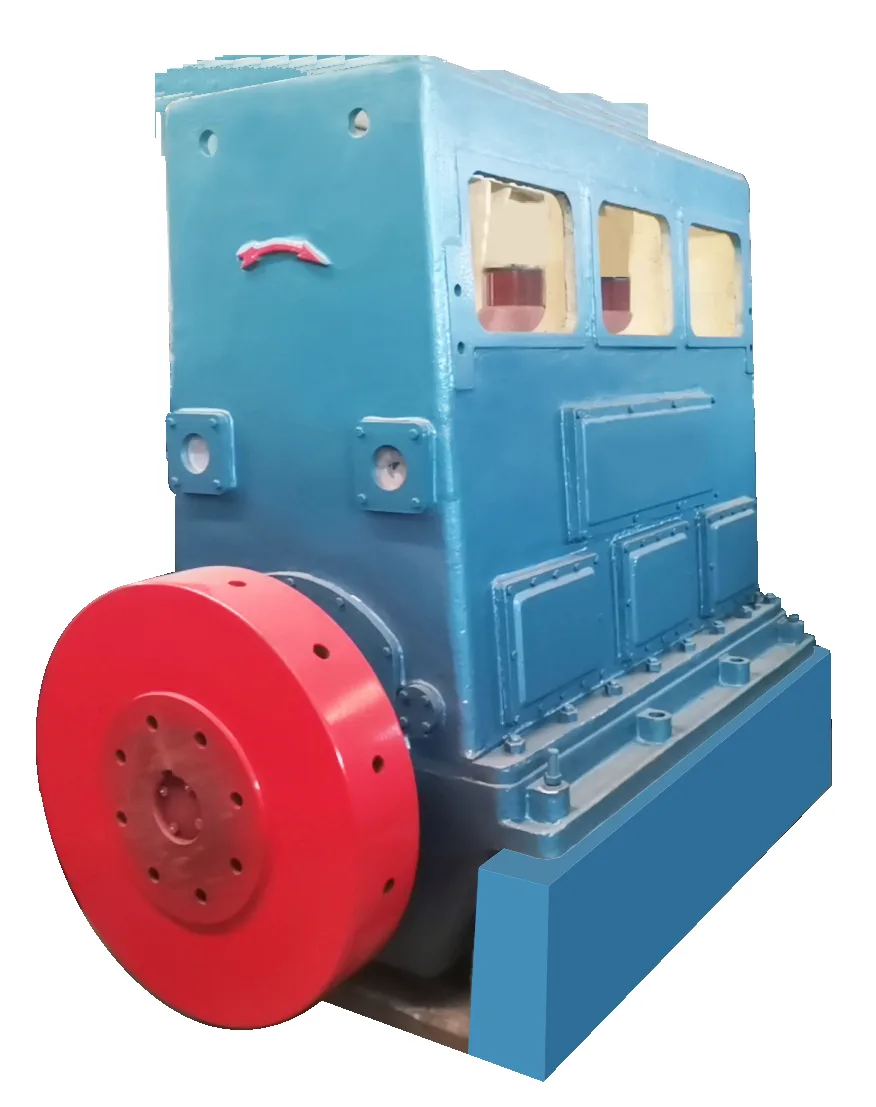
Reciprocating Compressor
When the gas has to be compressed, and the gas is oxygen or nitrogen at process pressure, the machine is a reciprocating compressor
Learn more →Get a Quote From the Factory
Tell us your flow, purity and pressure - an engineer replies within 24 hours.
Send Your Requirement
Flow, purity, pressure and application - four numbers are enough to start.