Cryogenic Storage Tank
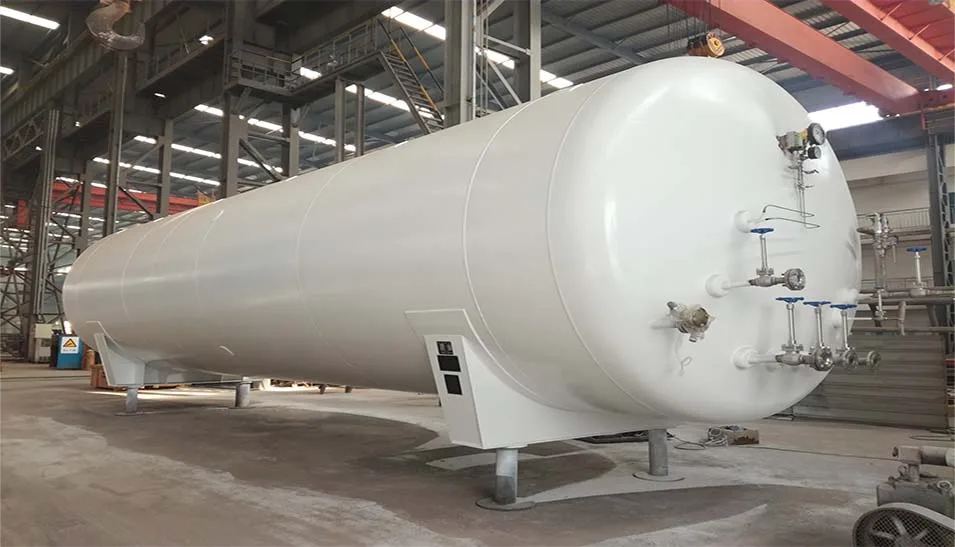
A thermos the size of a house, holding liquid air at -196 °C and losing a fraction of a percent a day
Learn more →The pickup-truck-sized thermos that turned micro-bulk into an industry. 80, 100 and 175-liter welded insulated cylinders moving LOX, LIN, LAR, LNG or LCO₂ at up to 3.45 MPa - road transport by day, on-site storage by default.
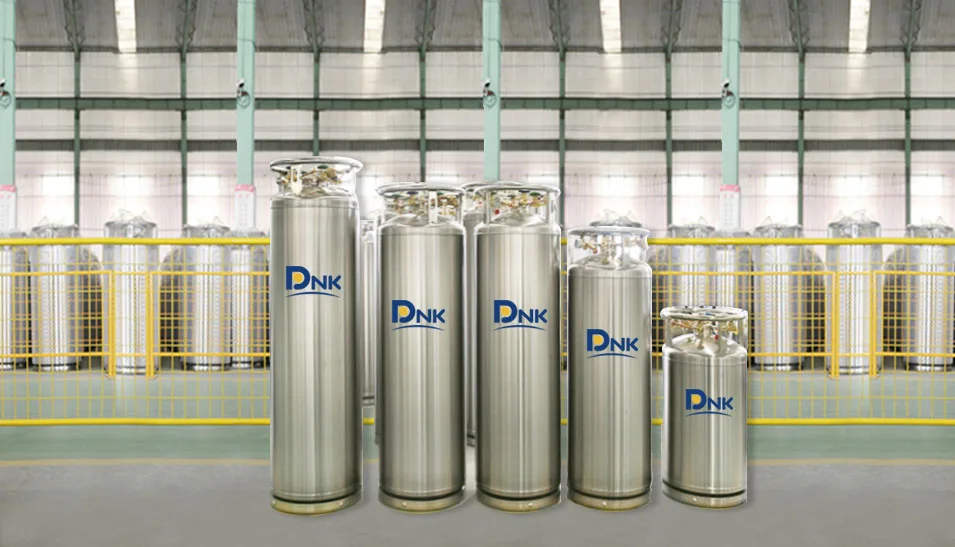
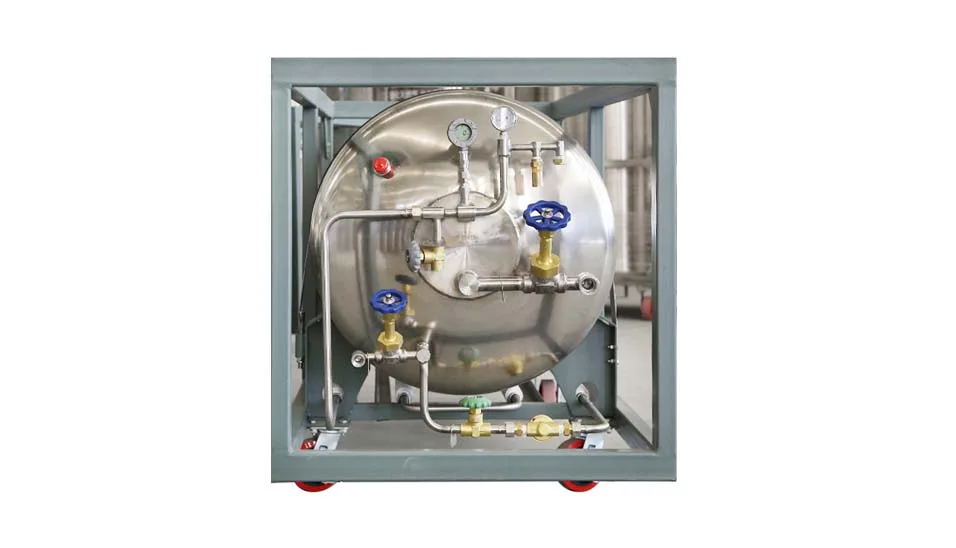
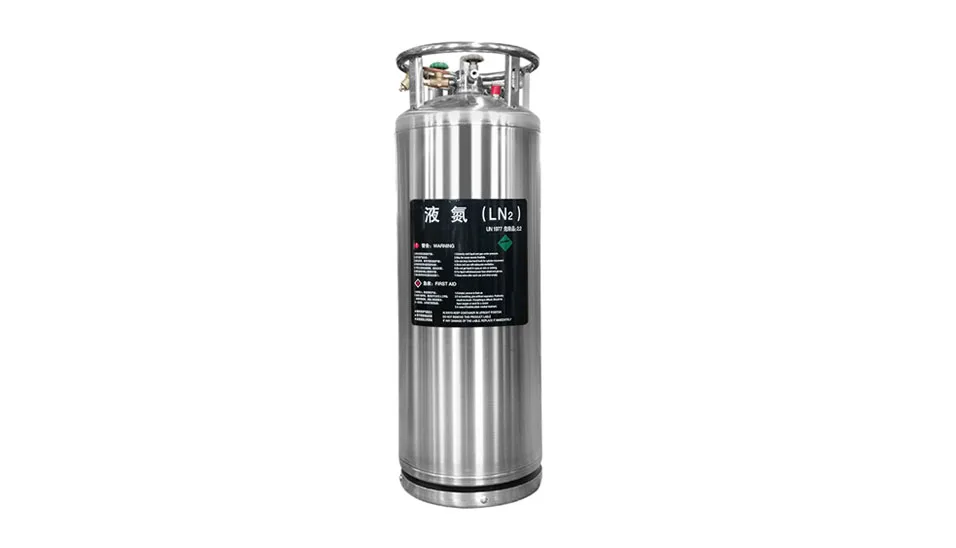
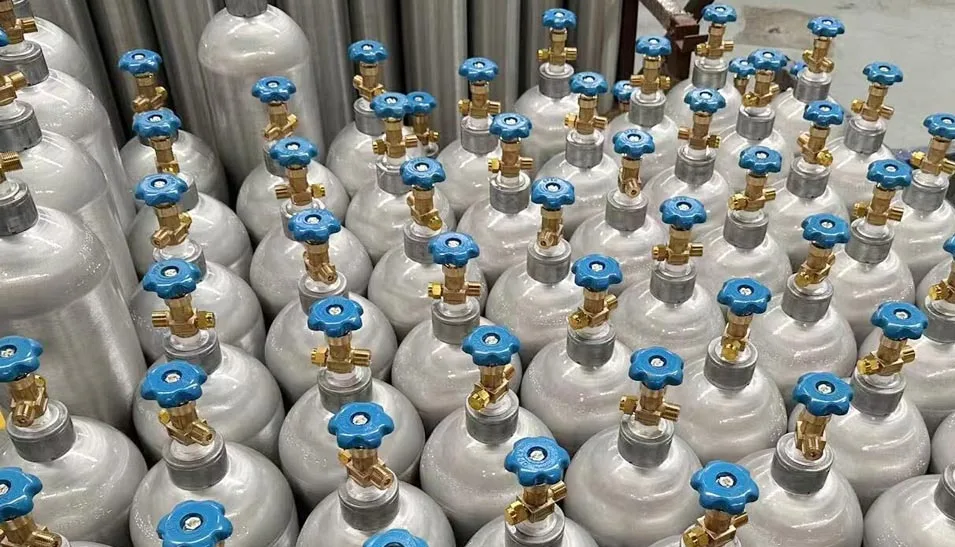
Stretch a vacuum flask to beer-keg proportions, arm it with stainless, wrap the annulus in multilayer insulation under high vacuum, bolt a valve cluster and pressure gauges on top, rate the whole thing for road transport - that's a welded insulated cylinder. Same cryogenic physics as our CFL tank farm, packaged so one person with a tail-lift can position a month of gas supply in the corner of a workshop.
The "welded" matters: drawn vessels top out small; welded construction carries the 175-liter sizes, thicker wall options and the 3.45 MPa argon class without becoming custom work.
| Parameter | Range / Detail |
|---|---|
| Volume | 80 / 100 / 175 L liquid capacity |
| Media & MAWP | LNG 1.37 MPa; O₂ 2.3 MPa; N₂/Ar 2.88/3.45 MPa |
| Construction | Stainless steel welded inner and outer vessels |
| Insulation | High vacuum multilayer (MLI) - days of autonomy, not hours |
| Duration | Holds pressure and liquid for 7-14+ days depending on use |
| Valve pack | Vent, pressurize, fill, safety, ruptures; service-specific |
| Regulator | Built-in vaporizer path to usable gas pressure |
| Transport | Road-legal units combining transport, storage and supply |
| Fittings | Cylinder-specific quick couplers per service |
| Warranty | 12 months from commissioning |
A 175-liter LIN cylinder holds roughly 134 kg of liquid - vaporized, somewhere north of 100 cubic meters of gas, depending on your vaporizer's duty. Compare the per-cubic-meter price against cylinder-pack gas and the comparison stops being a pitch. One workshop's annual nitrogen in about thirty dewars, stacked in two pallets, topped up monthly by a single tanker stop. Nobody is hauling gaseous bundles of tubes to keep a laser cutter fed anymore, and that's the micro-bulk thesis in one sentence.
Standard head equipment: pressure-building valve for self-pressurized withdrawal, inlet and vent valves, level gauge, dual relief with rupture disks, service valve to your regulator or vaporizer. Oxygen service ships oxygen-clean with brass trim and no hydrocarbon greases - state the service at order and the certificate ships with the unit.
Laser-cutting and heat-treatment shops running gas from a dewar bank behind the fence. Welding supply dealers reselling micro-bulk. Hospitals and clinics on liquid oxygen where piped supply wasn't planned. Breweries and food plants - CO₂ in, gas blending out. Remote mining and exploration camps, LNG pilot lines, research stations. Wherever tonnage outgrew cylinders but not yet justified a 45 m³ tank, the answer sits between those two sizes, and this is it.
Tanks are built vertical; transport racks and anti-tip fittings exist for the road duty, but permanent siting is upright on a firm pad with relief discharge vented to open air. Evaporation on a 175-liter unit runs roughly a couple percent a day at idle - fine for a weekly top-up shop, a sizing question for a slow one. Frost weeping at the neck after a fill is normal; frost creeping down the shell body is a vacuum health report, and the re-evacuation service applies here too.
YDS dewars are low-pressure, open-flask aluminum storage for liquid nitrogen - laboratories and biological storage. Welded insulated cylinders are pressure vessels: they deliver product at 10-35 bar to a vaporizer or directly as liquid. If the destination is a dry-shipping tank, YDS; if it's a machine or a pipeline, this page.
Yes with separation practice: oxygen and fuel/flammable banks keep their code distances, oxygen cylinders are never hydrocarbon-service units repurposed. We ship oxygen units clean and tagged; your site keeps the layout honest.
Cylinders ship as UN-classified cryogenic liquid receptacles with transport paperwork per your jurisdiction; road movement from depot to site is the normal last leg. Container consolidated shipping with filling heads and spares included - your freight forwarder gets our crating list.
Stainless vessels with vacuum-jacketed annulus run decades with periodic re-evacuation and relief-device replacement on schedule. The vessel itself ages slowly; valve clusters are the planned-maintenance item, and they're stocked.
A welded insulated cylinder - liquid cylinder, or Dewar cylinder, as half the trade calls it - exists because high-pressure tube cylinders are a bad deal for cryogenic service. Chilled liquid carries roughly 700 times the gas density per litre; an 175 L liquid cylinder holds the vapour equivalent of roughly twenty filled 40 L steel cylinders. If your site burns oxygen, nitrogen or argon at a rate where the cylinder exchange van arrives more than twice a week, a liquid-cylinder park is almost always the cheaper supply, and we will happily run the arithmetic against your delivery invoices.
The three-volume ladder covers the practical roles:
Compare honestly: cylinder supply bundles gas, rental, exchange logistics and the labor of changing bottles. Duval supply bundles liquid, one tank rental (or purchase), and a scheduled bulk delivery. Above a steady mid-range monthly consumption the liquid-cylinder side wins; below it the cylinder van is the honest answer and this page is the wrong page for you - the PSA generators are probably the right one.
Dewar-cylinder failure is almost never the vessel; it is the insulation vacuum decaying or the valve pack leaking. Our build choices target both:
Three rules, learned from other people's incidents reports, are written into every handover we sign:
Liquid cylinders ship with the service-appropriate coupler pattern your regulator set uses; tell us your regulator brand at order time and nothing needs a adapters on the day. Twelve-month warranty, and because these are vessels with a twenty-year working life, owners typically keep the park running and the same valve kits in stock for decades.
Liquid cylinders are bought two ways: as owned assets (you buy the park, rent nothing, keep them for twenty years) or on a gas-supply rental where the cylinder price hides inside the liquid tariff. Owners with steady demand and a purchasing department usually own; owners who value flexibility rent. Either path works - what fails is paying rental rates on owned behavior or the reverse.
The specification points that change the invoice, in order of impact:
Consumables are honest: valve seat kits, a vacuum re-service at decade scale, and routine regulator maintenance. Everything else on a well-kept liquid cylinder is your paint and your handling discipline. Send your monthly consumption, service and market, and the quotation comes back with the cylinder count that actually covers your week - including the spare everyone forgets to budget.
A thermos the size of a house, holding liquid air at -196 °C and losing a fraction of a percent a day
Learn more →Tell us your flow, purity and pressure - an engineer replies within 24 hours.
Flow, purity, pressure and application - four numbers are enough to start.