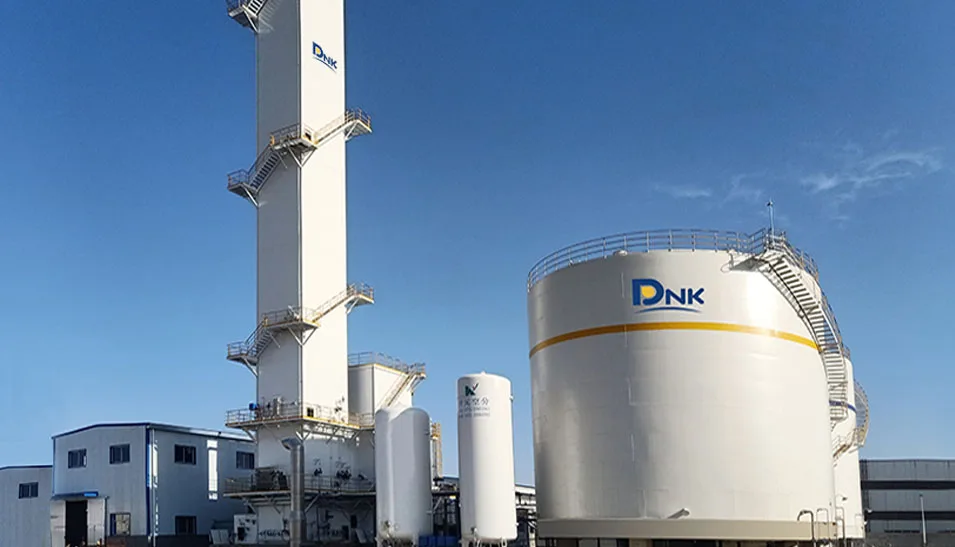
Gaseous ASU
The two processes that decide whether a gaseous ASU is cheap to build or cheap to run
Learn more →Cryogenic purity at mini plant scale. The SKDO/SKDON family pulls 50 to 250 Nm³/h of 99.5% oxygen, 10 ppm nitrogen, or liquid products from a footprint smaller than a shipping container yard - the workhorse for hospitals, gas stations and steel shops that outgrew cylinders.
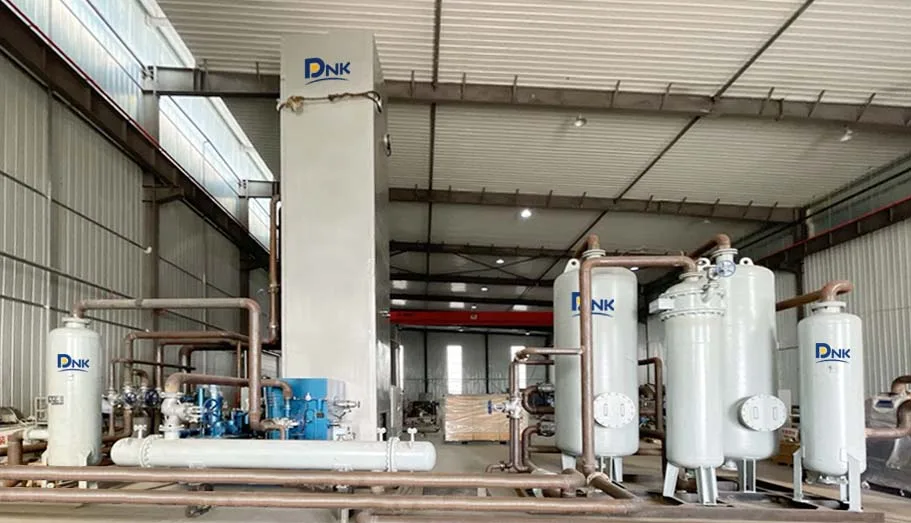
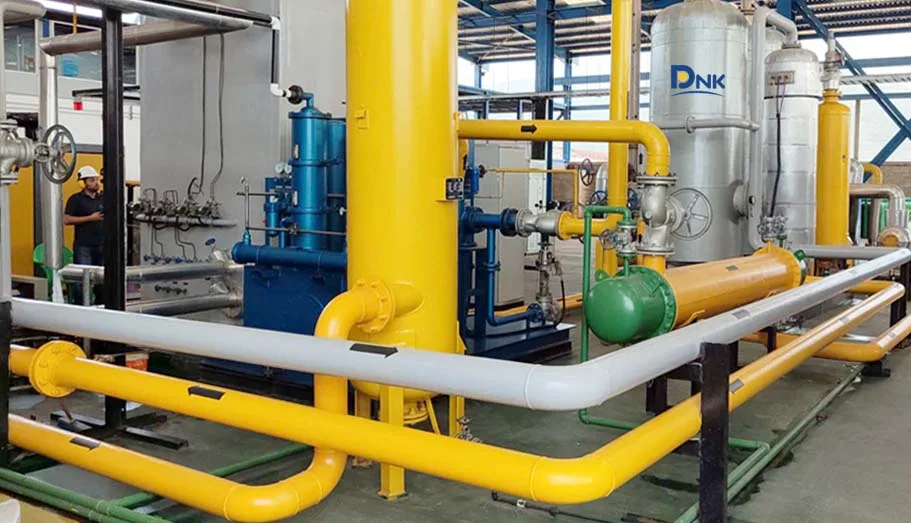
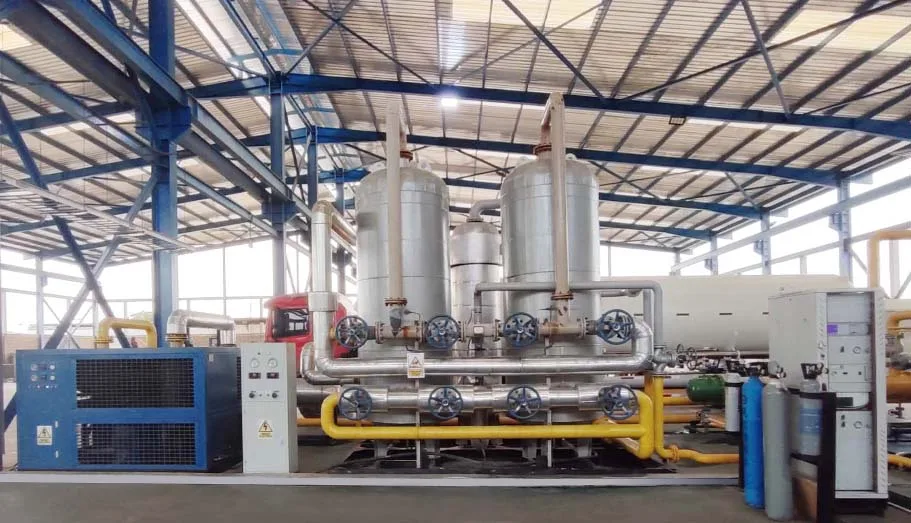
Air separation at large plants and air separation at 50 Nm³/h obey the same physics: compress the air, clean it, chill it until it collapses into liquid, then let the boiling-point gap between oxygen (-183 °C) and nitrogen (-196 °C) do the dividing. What changes at small scale is how you make the cold. A 60,000 Nm³/h plant runs turbocompressors and gets refrigeration almost for free; a mini plant like the SKDO can't, so we spin a turboexpander - a turbine that chills air by expanding it, borrowing a trick from the liquefaction world.
The result is a genuine cryogenic plant in a compact, pre-piped, skid-friendly form: 99.5% oxygen at the top of the cold box, 10 ppm oxygen nitrogen out the other side, liquid products drawn off when you specify them.
Control runs PLC with interlocks on cold-box temperature, expander speed and product purity. Trained-for-three-days operators can run it; we prefer to train them for five.
| Parameter | Range / Detail |
|---|---|
| Model line | SKDO / SKDON -50 to -250 |
| Product oxygen | 99.5% (gas) or as liquid draw-off |
| Product nitrogen | ≤10 ppm oxygen |
| Cooling core | Turbo-expander refrigeration, no mercury, no freight chain |
| Process | Molecular sieve purification, turbo expansion, all-aluminum plate-fin main exchanger |
| Products | Gaseous O₂/N₂, liquid O₂/N₂ for cylinder filling or barging |
| Footprint | Cold-box or skid package; containerized options for remote sites |
| Power band | Size-dependent; typical small units run tens to a few hundred kW |
| Operation | Trained-crew start-up; remote diagnostics on request |
| Warranty | 12 months from commissioning |
Hospitals and oxygen stations. A SKDO feeding a tank farm and vaporizer replaces cylinder logistics entirely - manifold redundancy, telemetry-ready, no 3 a.m. stockouts during a surge. Medical-grade oxygen at 99.5% comes out of the cold box, not a truck.
Small gas companies. Liquid drawoff turns the plant into a merchant business: fill your own dewar cylinders, sell to neighboring shops, control the margin the distributor used to keep.
Steel, non-ferrous, chemical, paper, laser cutting. Wherever oxygen is a process cost rather than a commodity purchase, a plant paying for itself on the spread between on-site cost and delivered price is the whole argument - usually two to four years.
Gas or liquid mode. A SKDON-150 can pour around a ton of liquid products a day while still supplying gas; a pure-gas plant of the same feed spends its full capacity on the header. Liquid plants earn flexibility, gas plants earn volume. Many buyers run liquid by night, gas by day.
Storage and fill. We pair the plant with CFL vacuum-insulated tanks, welded insulated cylinders or YDS dewars from the same factory - fill headers, venting and safety interlocks arrive pre-engineered.
Altitude and climate. A plant for a 2,000 m site in the Andes is not a plant for a Gulf coast waterfront. Compressor maps, expander corrections and sieve regeneration all shift; we recalculate the cycle instead of oversizing blindly.
Need it moving, or needing to clear customs with minimal site works? Cold box, towers and purification skids can ship as single pre-piped blocks or inside container modules with the control room in the corner. Site work becomes civil pads, power and water - weeks instead of months of field erection.
The mini plant is where casual assemblers expose themselves. Cold-box contraction management, expander bearing protection, sieve regeneration stability - these come from repetition. Our engineers have commissioned nearly 300 ASU projects, 18 of them at the 30,000 class, and the small plants carry the same discipline of design review, X-ray'd vessel welds and factory test runs. Your 50 Nm³/h unit gets the same cold-box software and the same A1/A2-license fabrication as our largest trains; only the size changes.
Send gas or liquid mode, flow, pressure, altitude and site photos. You'll get a cycle simulation summary, plot plan, power estimate and a firm quote inside 24 hours. One plant is a complete order - the MOQ is your site.
Plan around 110–160 kW connected in typical gas-mode service, dominated by the compressor; liquid mode shifts the balance toward the expander and pumps. Your altitude and inlet temperature move the number, and the proposal quotes actual predicted consumption rather than a catalog average.
The PLC runs the plant, alarms abnormal states and safe-shuts-down on purity or temperature excursion. Unattended *operation* with remote monitoring is realistic - we offer it as a service package; unattended *maintenance* is still a myth at any scale.
Factory build and test for a standard small ASU is commonly in the 4–6 month band, then a few weeks of site piping and commissioning. Containerized configurations compress the site side further. Your proposal carries the honest calendar.
The plant turndowns to recirculation mode and stores liquid, or the storage tanks carry the load while the plant idles - both strategies are engineered at design time. This night-shift liquid accumulation is precisely how small gas plants make their margin.
Buyers cross-shop SKDO units against PSA machines constantly, so put the comparison plainly on the table. A PSA oxygen generator caps out around 93-96% and cannot make a drop of liquid. A small cryogenic ASU at the same flow gives you 99.5% oxygen, a parallel nitrogen stream at 10 ppm, and - this is the business-changer - liquid product you can bottle into cylinders or sell to neighbors.
That liquid capability turns a gas user into a gas business. A 100 Nm³/h SKDON feeding a cylinder filling bench serves a whole district of workshops, hospitals and fish farms. Hospitals in particular land on SKDO units: piped 99.5% oxygen for the ward manifold plus standby liquid reserve, without waiting on a tanker schedule that may be two days of mountain road away.
The trade-off is attention. A cryogenic plant needs trained hands, a pre-start checklist and discipline around hydrocarbons. We price the training honestly into the order and we refuse to sell the plant to owners who intend to run it like a light switch.
The flow scheme is classical small-cryogenics engineering, and it fits in a paragraph once you stop selling it:
Three site facts change everything on a small ASU, and every one of them is free to fix at design stage:
Commissioning runs two to four weeks with our engineers on site; your crew shadows them for the full duration and signs off the O&M handover. After that, the unit is a daily checklist, a weekly analysis log, and a sieve and turbine service at the intervals in the manual. Owners who keep the log do not call us; owners who lose the log do.
If you are weighing a SKDO against liquid deliveries, send us twelve months of consumption and delivery records. The spreadsheet we run against it will tell you the payback in months, and if the answer is "keep buying liquid," that is the answer we will give you.
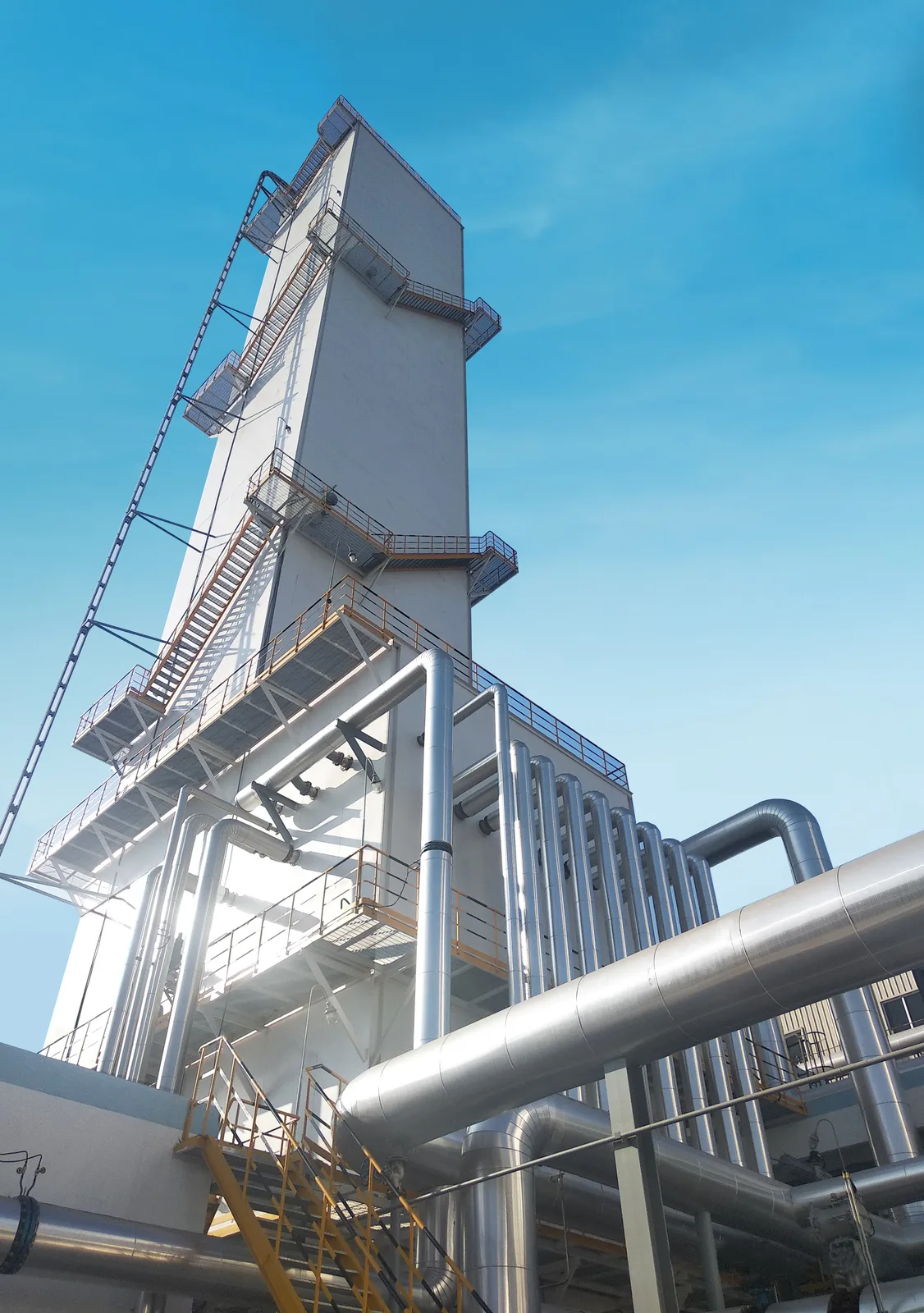
The two processes that decide whether a gaseous ASU is cheap to build or cheap to run
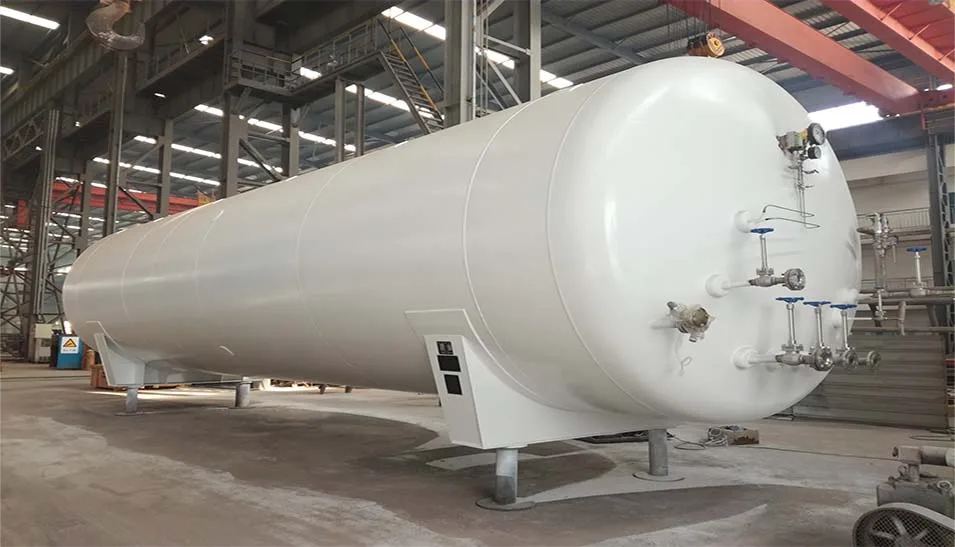
Learn more →A thermos the size of a house, holding liquid air at -196 °C and losing a fraction of a percent a day
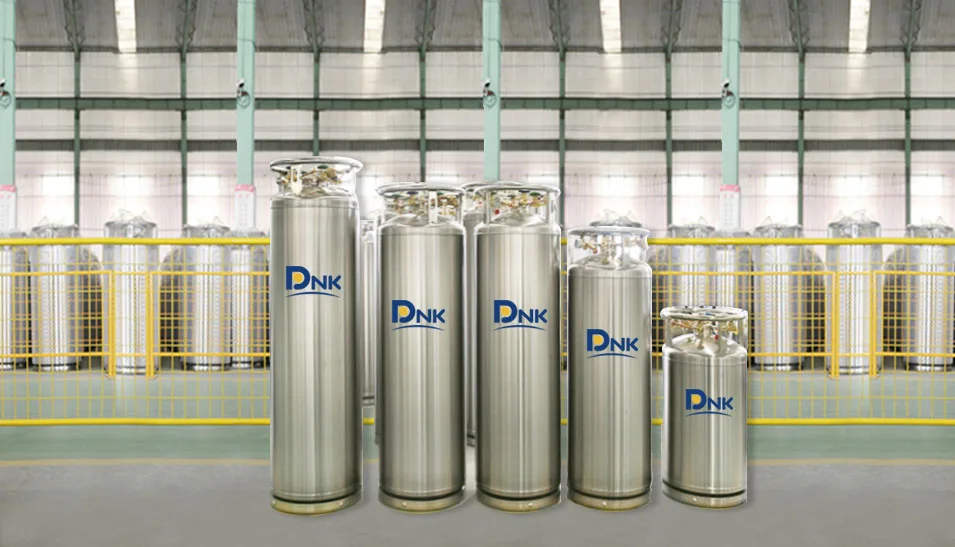
Learn more →The pickup-truck-sized thermos that turned micro-bulk into an industry
Learn more →Tell us your flow, purity and pressure - an engineer replies within 24 hours.
Flow, purity, pressure and application - four numbers are enough to start.